Published April, 2006
My guise is up as soon as I reach into my pocket. It’s just too Lonely Planet-perfect to resist: the smoky coals, the roasting satay ayam, the Malay man’s skilful fanning wrist. As I gingerly ease the camera out into the open, two young girls behind the stall shriek and take cover, suddenly self-conscious of the foreigner in their midst. After purchasing five satay sticks for one ringgit, I quickly wander off to explore another part of the bustling Friday night market where, as long as I don’t attempt any verbal communication, my Chinese blood can temporarily bleed into the crowd, passing me off as simply another local.
I linger with unnecessary caution at Sri Lalang’s main intersection, a crossing traveled more commonly by motorbike than by car. Helmet-less mothers, sometimes with as many as three child passengers: two toddlers up front against the handles and the oldest clutching on from behind, chug by dutifully. Most of the storefronts have closed up, leaving oil palm bunches out front for collection and the quiet rumble of Cantonese telenovelas and buzzing games from Japan to fill the warm dusk. Laughter erupts from a couple of weathered Chinese men in wifebeaters, sipping pulled tea in the coffeehouse of a tired-looking Malay sporting a black songkok, the rotund hat commonly worn by Muslims throughout Malaysia.
I notice how much more overtly race-conscious this past few weeks here has made me. Sectatranism dominates political debate and social discourse throughout this small island state with even greater command than it does in the United States. There, political correctness has only managed to stifle and elongate discussion (largely through clarificatory qualifiers repeated unto meaningless redundancy, such as “Now I’m not a racist, but…”) on issues such as affirmative action and poverty measurement, rather than lend the clarity and dignity of debate which may have been its original intention. In Malaysia, the Anti-Sedition Act is well-known for its selective use, often employed to prevent criticism of contentious state policies which selectively target bumiputeras (non-Chinese and non-Indians) as recipients of a variety of benefits. In the former, minority rights are the target of liberal protection; in the latter, majority (Malay) rights are guarded by an incumbent party whose platform is rooted in ethnic assistance.
Sri Lalang, whose name starts off sounding like that of another small Asian country but finishes with a certain Sino-lyricism, has a short but interesting history. It was founded as a concentration camp of sorts for Chinese by the British during the “Emergency,” the 12 year long civil war between Chinese communist guerrillas entrenched deep in the interior jungle and the waning British authorities. In its original incarnation, the village was fenced off, and those leaving and returning to the compound had their possessions inspected to ensure no food or goods were being smuggled out to support the revolutionary “terrorists”, who had been fighting since prior to the departure of the Japanese following World War II for an independent republic. Even bicycle tyre tubes were routinely checked in order to ensure that air was not being replaced with grains of rice.
My mother reminisces occasionally about how the leftists would come marching around the village, singing catchy anti-imperialist songs and encouraging the children to follow them – a “Little Red Pied Pipers” fairytale mash-up, one might say. Some of the more adventurous children would take up the offer, joining the others in order to combat capitalist oppression before the Federation crushed what little resistance was left. Perhaps because her father was a proud member of the anti-insurgent Home Front, my mother focused her time on school prefecture, tapping rubber and the acquisition of a bachelor’s degree overseas, eventually leaving Sri Lalang far behind.
I recently returned to the village without her. A quick motorbike tour of its small streets provided a microcosmic insight into the current state of the country’s race relations. New low-income Malay settlements were popping up on land previously used for rubber plantation, augmenting the previously Chinese-dominated town. The distinction is not difficult to see: their homes use slightly different architecture (though the same concrete and stucco material) and lack the red lanterns and altars which adorn practically every Chinese home. Prayer houses and mosques can be found nearby, rather than Buddhist temples that Chinese women could be seen making morning offerings at. Though I witnessed a couple of Indian siblings playing soccer on one street, the majority of them can still be found in a separate Tamil settlement across the highway.
Ethnicity in Malaysia is a fascinatingly complex beast. Whereas the post-native populating of the United States can be spaced reasonably accurately through a series of events (British settlement, Slavery, Irish potato famine, etc.), the same cannot be said of Malaysia. The distinction between the bumiputeras (“Sons of the soil,” meaning Malays and Natives) and the Chinese and Indians may be validated by ethnicity but certainly not through chronology: swathes of Chinese-Malaysians arrived through trade relations long before many current bumiputeras arrived from other reaches of the Southeast. At the birth of its federation, the Chinese actually comprised Malaysia’s largest ethnic group, until Singapore’s secession in 1965, selective immigration and declining birth rates landed the Malays in the lead. Such ambiguities comprise a large part of the reason why legislation which quite obviously privileges Malays—95 percent of government contracts, for example, are distributed to Malays—ahead of minority groups is greatly resented by the remainding 40 percent of the population.
Whilst being carted about by one overly-generous set of relatives and family friends after the other, I found the parallel dimensions of their Chinese existence quite striking. A Chinese in Malaysia may be born in a Chinese Maternity Hospital, educated entirely in private Chinese-language schools, eat and shop at Chinese businesses, read and consume exclusively Chinese media and observe only Buddhist practices before finally being buried, naturally, in a Chinese public cemetery. Malay need only be spoken during brief public exchanges, whilst English remains almost exclusively the language of science and foreign business. It is only when taking a break from my well-intentioned but cloying family that I was able to observe life outside of this transplanted Sino existence, wandering through mosques and Hindu temples in Kuala Lumpur between delicious roti snacking in Malay hawker stalls, admiring the graceful movement of the women and smiling at the oddly endearing veil-to-head-size ratio of pint-sized schoolgirls.
It wasn’t always the case that ethnic groups lived in such separated parallel dimensions, walking the same streets but in virtually different planes as they do now. I recently visited a street in the old capitol of Melaka where two temples, a mosque and a Tamil church laid practically beside each other. It seemed a suitable symbol of a pre-Federation Malaysia that my parents’ childhoods can harbor only nostalgia for at this point. My mother played amongst Malays and Indians and my father the same, but with Kadazans and other indigenous children thrown into the mix. When inviting Malay neighbors over for dinner, they simply made sure not to cook pork separately. It was a multiculturalism through small town practicality: folks tolerated each other because they had little reason not to, nor to interrupt their mutually beneficial economic relations.
This changed dramatically following the ascent of the United Malay National Organization (UMNO) party to national leadership. Islam became the national religion, Bahasa Malaya the formally recognized language. Malays were by law Muslims, the Chinese and Indians classified as “minority groups” and a series of legislation involving quotas and business schemes were introduced, supposedly to “pull up” the bumiputeras. Perhaps because of this, minorities banded together, setting up private institutions or even moving overseas where state ones denied them access, and marrying amongst their own rather than face forced conversion. I find it sad yet understandable that the Chinese and Malays in Sri Lalang socialize at separate cafes on the weekends, though see glimpses of good will in the oft-colour blind commerce of the weekly market. I took hope in the “plural society” speeches my cousin’s classmates made during a school competition, though their lofty assertions also struck me as even hoarier than the naive multicultural grandstanding that hides far deeper problems for Aboriginal communities across Australia, and Dutch-Muslim relations in Western Europe.
Prime Minister Badawi has made claims that his moderate Islamic vision for Malaysia will successfully equip it for a planned technological and industrialized leapfrog toward Western standards of living while remaining true to Malaysian moral and religious standards. In Sri Lalang, I found rows of new “garden” developments, where hardworking families were moving into Western-standard homes purchased on the back of years of honest hard work. I was reminded of something my 22 year-old cousin said to me quietly: “What’s the point of (sectarianism) anyway? We’re all Malaysian.” I think it’s even simpler than that. By keeping religion out of state affairs and focusing on a merit-based system of advancement, a lot of this current ethnic distancing could easily be closed. Rather than existing as an officially united but in practice segregated society of Malays, Chinese and Indians, the country could serve as a timely example of successful Asian development and moderate Islamic practice. Unfortunately, with a comfortably entrenched bumiputera electorate and meddling Malay elite, ethnic relations in towns such as Sri Lalang throughout the country will likely remain as segregated as at present for some time to come.
i) Malay: Melayu, referring to the ethnic group which currently comprises the majority in Malaysia, that is: not of Indian, Chinese, or “indigenous” descent
ii) Malaysian: A citizen of the state of Malaysia, referring to nationality. Ex: Chinese-Malaysian, Australian-Malaysian, etc.
Wednesday, April 19, 2006


Squatter's Confessional
Published April, 2006.
Some cultural trade-offs are harder to accept than others. Take squat toilets for instance, which I used to hate with a passion. I loathed them as I do snakes. “How dare you pass yourself off as worthy of my sanctified toosh and it’s business!,” I might have sneered, if I hadn’t been so concerned with steering so far clear of them. Those two white tiles for traction, and that miserable little hole in place of where I expected not only a bowl, but also a comfortable seat and a cover to boot. During one particular trip home to my mother’s town of Sri Lalang, I reacted as any stubborn eight-year-old might: I just refused to use them. Full stop.
Now that only gets you so far. Before long, my parents tired of taking me out on exclusive journeys to the local shopping centre and its modern plumbing facilities. Thus began the famous conflict between Mark’s will and his lower intestine. An epic battle of attrition that lasted well into the fourth day -- most likely pushed over the edge by some sneakily placed tofu during the thirteenth confrontational meal – nature worked its unstoppable force and unsurprisingly my will eventually gave in (as my colon gave out). But not to the squat toilet. Oh no, it would take more than mere excrement to hole me up in such a dungeon, with its foul odour and icky wet concrete.
Now as with any resistance movement that faces uphill odds, I had gone on several scouting missions in the backyard of my grandmother’s house beforehand. My thoughts followed the approximate reasoning: So it has to come out. That variable was as fixed as Newton’s third law. The real question was “Where?” Other components of the issue at hand were the need for disguise, accessibility and speed. I couldn’t just leave my loaves on the front door step like a dog, nor could I drop them off at the base of a tree, which Po-Po would inevitably stumble across during her daily vegetable gardening. Digging a hole and then covering over the matter – camper style – might have been the way, but for the fact that the whole backyard was being cultivated and I would inevitably be destroying something she’d been growing. Even self-righteous guerillas have to think about their grandmothers.
The next option was to dash beyond the confines of the family land altogether and off into the thick jungle with its huge banana foliage and overgrown vine vegetation, perfect cover for all manner of rank deeds. And I probably would have gone with that method of release, but for the fact that I was eight and still genuinely fearful of the local terrain. Malaysia itself was a source of continuous mystery and frustration to me at the time; dropping my daks in the bush and leaving my behind privy to various snakes and leeches was something my creative imagination would not allow. This dilemma over the sanity of my sphincter and the frightful clutches of Mr. Squat had by this point reached truly explosive proportions.
It was around this stage, whilst urinating my way along in the stream that runs through our backyard, that I had my “Eureka” moment. Of course, I’d found much simpler means of relieving my bladder, and this waterhole was but one of a number of locales at which I’d spilled my own golden stream. Casually observing urine disperse into water, I noticed that this particular channel appeared to flow straight out of the house, down towards the deeply sunken, well-shaded river. Connecting the dots, I concluded that if timed correctly, a quick drop of the short pants, 180 degree rotation by the stream’s edge and speedy expunging of the digested remnants of four days worth of rice and Hainan cooking would set the battle straight. My Number Twos would waltz right on down the stream and into the river, probably disintegrating into lovely soil nourishing food for all I cared. The triumphant result: Mark – 1, Squatter – 0. I would walk away the bigger man, and nobody, especially not my parents, would ever know.
Almost immediately, the point of no return arrived, when all a child can do is plead to self: “Hang on a minute, just don’t do it in your pants.” As previously scripted, I carried out Operation Bomb the Stream in the backYard (OBeSitY) in meticulous fashion, seemingly without a snag. I’d even remembered a roll of toilet paper. The trouble came only after I had pulled up my trousers. Letting out a small but satisfied sigh of relief, I came to the nasty realization that there had been a hitch. Alas, the current’s strength would not move my recently deposited brownness downstream. It stayed put, exactly where I had dropped it, and not even several rather panicked pebble throws could cause it to dislodge.
I returned to the house a sad and disillusioned boy. Counting down the minutes before the inevitable discovery, angry finger pointing, and useless but plaintive denial process would begin, I tried to console myself with the refreshing return of lightness to my lower stomach. But oh the humility! I could have died with shame that night. I didn’t, and I return to the same house today, only to find that the squat toilet has been replaced with a lovely plastic seater. I’ve long since overcome my aversion to the former, but shall never forget the bemusement it caused my grandmother, who has passed away since I last visited this house, that sunny afternoon some years ago.
Tuesday, April 11, 2006
A Wild Man in Borneo
I recently purchased a book from the Sabah State Museum entitled With the Wild Men of Borneo by a missionary named Elizabeth Mershon. It begins thusly:
"Borneo! What does the name suggest in your minds? The first thing probably is the 'wild man from Borneo.'...All I knew about the country was that it was where the wild men lived, and I always imagined that they spent most of their time running around the island cutting off people's heads. Before you finish reading what I am going to tell you about distant Borneo and its people, I hope you will have learned that the 'wild man from Borneo' is not such a bad fellow after all."
That was written in 1922. I have just gotten back from a helter skelter two-day trek through the island's northern interior from west coast to east coast, Kota Kinabalu to Sandakan. And I can gladly report back that, 84 years on, and with a world which remains largely oblivious to its existence, the people of Borneo are still not such bad fellows after all.
The party—14 Hiews of varying shapes and sizes, ranging from Uncle Yun-Loi, a small, agile chap of about 70 to the ever-bouncy six-year-old, Hua—set out early enough from Beaufort, scooping me up in KK, as the capital city is known (thank goodness its not Kota Kota Kinabalu!; many Malay words are doubled so it might've been possible). The previous night, my cousin Yong, who lived with my family in Australia during our high school years and now works in the city for Ernst & Young, had taken me out to sample the local nightlife. It was quite surreal going from the rural jungle living I had just observed, where lifestyles remain largely removed from or incapable of affording modern technological and economic change, to the rather bangin' scene at Shenanigans nightclub, at which a lively Filipino cover band played renditions of "My Humps" and "You're Beautiful" to a demure crowd with its fair share of popped collars and grinding that wouldn't appear out of place in Soho or Adams Morgan.
The outward journey was long and trying, compounded by the lack of air conditioning in my uncle's people mover (van). This might have been bearable but for said uncle's driving methodology: best described as a mix of rally car driver and bank robbery escapee. Caked in multiple layers of sweat and grime and being jostled around incessantly from my back corner, I discovered a newfound sympathy for Shake N' Bake Chicken. So this is what it feels like to be seasoned and thrown into an oven, simultaneously even! Because of such conditions, I found my motivation to sight-see somewhat dampened (if not drenched), however, Mount Kinabalu, its rocky black peak appearing from behind a veil of consistent mist, remained a sight of untrammeled tranquility. For several reasons, I shall not be ascending its 1401 metres on this trip, having to make do with imagined sunrises over the South China Sea instead.
The Borneo jungle is at this point a very different affair in comparison to its pre-logging glory. Between the nineteen seventies and eighties, 90 percent of its natural wood was clear cut and shipped out, largely in joint ventures between the federal government and Japanese businesses. Most of my uncles were employed, sadly, in the all too efficient destruction of their homeland's natural habitat, operating bulldozers and clearing roads in often-miserly conditions. The result is a mixed picture: though still outright beautiful and humbling, with its hilly green lushness, steep cliffs and picturesque waterfalls, the jungle itself is almost entirely new regrowth or oil palm plantations, which are currently the most profitable cash crop for the state's inhabitants. Apparently, over 64 native mostly agrarian tribes once roamed the island--some of who used blowguns and darts, and a few of who were headhunters, which appeals greatly to the omnipresent eleven-year-old in me—but, during my trip, the only employment I saw them involved in was the selling of Orang-utan dolls and traditional weaves at tourist stands by the roadside, occasionally in their native attire (which is dazzling) but most often in western garb.
Along the way, my father pointed out the road to the copper mine at which he and my mother worked immediately before moving to Australia, adding that it was the place of my conception. Now there are several things that people should not do, regardless of culture or heritage. One of them is pissing on somebody's grave. You just don't do it! Another is providing your children with details about their conception: the imagery is uniformly disturbing in a Freudian nightmare reality sort of way. Besides learning extraneous proto-Mark details, along the road I observed numerous dilapidated, faded wooden shacks, often featuring green creepers at various stages of eventual natural reconquest of these homes, which belong to subsistence and cash crop farmers. In uber-stereotypical third world form, I saw several naked children standing in front of open windows. Construction remains a consistent eyesore. Illegal immigrants from Indonesia and the Philippines, their faces protected from the dust by makeshift cotton rags, hung from rickety wooden scaffolding.
We reached Sandakan not long before dark, greeted by a tacky Orang-utan statue in the town's entry roundabout. Blessed with potentially the least romantic name in history—it means "to be pawned" in Sulu, the Sultanate to which it used to belong—Sandakan successfully puts the "shit" in "hole," providing fresh new meaning to the word "fugly." Possessing none of the subtle majesty of traditional Malay architecture or any of the Hong Kong charm of its former major trading partner, it appears to have shuddered into the 21 st Century through an utterly indelicate shove from modern industry. A port for largely Chinese and Japanese-owned oil palm and fishing distributors, in its wake Sandakan makes Detroit look like Paris, Glasgow sound like Venice. Its main sights of interest involve a three-legged rock and a pungent fish market, the latter of which my seafood-adverse self was spared the odour. We stayed for only a short while, meeting up with my politician Aunt's fellow party cadre for a seafood restaurant dinner. (I had the venison.) We chose to stay outside of Sandakan for fear of desperate Filipino robbers, choosing a hotel at the more-suitably Chinese "Mile 4." Outlying suburbs, in keeping with the town's utilitarian spirit, are named according to their distance from downtown.
The following day, after a noodle soup breakfast at one of the local market stalls—where one enjoys the dubious pleasure of seeing your food cooked and dishes washed in quite squalid conditions—we set off on our return journey. Along the way, we passed shanty kampungs built over the bay, home to the absolute poorest of the poor. If Malaysia wishes to become a developed country by 2020, which its former Prime Minister announced several years ago—it must come up with a way to cope with the rural/urban divide, a pervasive problem certainly not limited to its borders. After revisiting the farmland where our family once lived, we stopped at a crocodile farm. Young Ah-Hua raised a bit of a ruckus amongst the largely immobile, sun baking reptiles when she stomped up and down excitedly on the wooden walkway above, allowing me to snap some quality Steve Irwin-without-Steve Irwin photos of the animals play-wrestling. One humorously straightforward description read:
"My name is TAKO from Lahad Datu, around 60 year old. My length is 17 feet and weigh 800 kg. Wild Life removed me to this place, because I ate 4 residents in the wild, Now I eat only one chicken everyday." (Sic)
Following, we visited the Sandakan War Memorial, the site at which thousands of Australian and British POWs were held towards the tail end of World War II. The Japanese forced my grandmother to work on construction of a new airfield, and the photographs of skeletal Aussie soldiers working away on the same war project brought home to me how easily the pendulum of history can change course. Interestingly enough, I learned that an underground network existed between Australians and locals, through which guerilla resistance fighters could plan ambush attacks. I walked along the wooden walkway which followed the identical path that the troops were once forced, along with my grandfather, to take during the Sandakan-Ranau death marches with Ah-Hua's hand in mine, attempting to visualize the scene some 61 years ago. Through terrible torture, measly rations and hellish labour, it's not difficult to see how so few Allied POWs survived out in this humid terrain, in conditions so far removed from the dry dust of the Australian plains or of grassy, temperate England.
We then set off back to KK, this time I was in the other, far more sensibly driven four-wheel-drive, and thus was able to read and reflect on the journey home. Close to home, the mists of Mount Kinabalu descended upon the road, and my uncle turned on the headlights. That night, it was back to Shenanigans for the same cover band's stirring rendition of "Y'all Gonna Make Me Lose My Mind" by DMX. The bipolarism of Malaysia's urban-rural gap had never sounded more incongruous.
On Qingming and Family
I am the son of a Malaysian Hakka metallurgist who stepped through the cracks of a bipolar world, from the humble poverty of his kampong home and into the opportunity and upward mobility afforded by the progressive politics and anti-colonial sentiment of 1970s Australasia. In turn, he is the son of a fatherless farmer, who escaped the abject poverty of early 20th Century China and—as a teenager—entered into a binding three-year term as an indentured laborer for the British, tapping rubber at a plantation in North Borneo in exchange for a boat ride to a better life.
I knew this man as “Gong-gong,” or grandfather, in my occasional face-to-face encounters with him as a child. Taking month-long breaks from the school holiday centres my working parents would drop me off at during those dry, hot Australian summers, my brother and I would whinge and whine our way through the grime and humidity of the Third World, my parents winning brief respite by shoving KFC or Cornetto ice creams into our ever-insolent mouths. Being ignorantly assimilationist, “White-culture-is-better” children, we made no effort to learn either Mandarin or the local Hakka dialect, thus leaving our myriad cousins the privilege of attempting to communicate with we high-and-mighty Australians in the 4th language English they learnt in grade school.
I never exchanged a single sentence of conversation with my grandfather, who was illiterate and did not acquire Malay, let alone the tongue of his white colonial masters. He did, however, willfully weather my then five-year-old brother’s gleeful assault by water pistol, much to my parents’ chagrin. And once, when he was already into the 10th decade of his life, I recall him slowly climbing the steep set of stairs in the creaky two-story home that he built with his own hands in order to call me to dinner. My most vivid memories of Gong-Gong involve him rocking in his chair, contentedly watching as his thirteen children and dozens of grandchildren puttered by as he rolled tobacco, crossed legs swaying gently.
These are the bridges I attempt to cross in returning to Borneo and its dilapidated, stagnant ways for Qingming. Utterly crippled by my inability to comprehend nor articulate, I sit at the table as my father and his siblings play catch up, exchanging gossip and stories of the West over Chinese tea and cans of Tiger beer. Hakka, which passes unruffled through my monolingual brain, sounds like a courser, more rural Mandarin (Sentences ring with suffixes like “num,” “phat,” and “sit”) and has a surprisingly potent hypnosis effect. I find myself zoning out, before subsequently passing out (work colleagues, Nikki, may not find this surprising!), before being tapped back to consciousness when it is time to leave. At once frustrating and boredom-inducing, my linguistic incompetence makes the process of reconnecting with my roots—those curious, meta-historical pieces of immigrant make-up which hover in the sub-conscious, always resisting one’s subjugating tendencies—an exercise comprised largely of inferrence and abstraction.
A few days ago, we journeyed to my grandparents’ grave in a humble Chinese cemetery a few miles from the Hiew clan estate. It is built straight into the steep hillside for feng shui, the tombs surrounded dramatically by the voracious, tropical Borneo jungle which often seems to swallow up its inhabitants’ clearings. After greeting the caretakers and praying to the Protector God who oversees the dead, we walked around the hill to my grandparents’ graves. They lie side by side, their tombstones reading “Chinese Public Cemetery: Guanxi, Hiew Nee” and “Bao On, Kwangtung, Nyam Choi Yu” respectively, providing only place of birth and name for identification purposes. Each of us symbolically swept clean both cement graves with the palm leaves my cousin had cut down from our back yard earlier, then laid down food and drink as offerings. Oranges and apples, a couple of whole boiled chickens, peanuts and biscuits, rice wine and soy milk – a glance around the cemetery proffered similar scenes as numerous other Chinese families went about their business. Aunt Moi-Yun handed me a bundle of joss sticks as my father provided guidance: “Bow three times to Gong-Gong and place three sticks in the dirt in front of him. Do the same thing for Po-Po.”
After the burning of incense came the offering of money and possessions for the underworld. Though few of my family members are practicing Buddhists, they made sure to bring a bountiful amount of goods. At first, I was surprised to see they were burning actual shoes and actual shirts. “They sure take this offering business seriously,” I thought, before sheepishly realizing that they were made of cardboard, designed expressly for Qingming. My cousins spread out fake paper money, some of which looked like Taoist scrolls, others like bills and still others like silver coins. Each bill had a numerical amount of 1,000,000,000 UWC (Underworld currency) listed upon it.
“Unfortunately, the exchange rate is very low,” my father joked.
As the wealth of paper and cardboard burned away before the tomb of my grandparents, I looked around me at my fellow Hiews, of whom I spend such little actual time with. They chatted light-heartedly, dressed casually in the rag-tag t-shirts and shorts Western fashion has conferred upon us. One cousin, a gentle eighteen-year-old named Ming Jai, asked me how Christians worship their ancestors. Black ashes rose and fluttered through the air, wafting slowly upwards, perhaps towards my grandparents. I tried to imagine the life experiences that Hiew Nee took to his grave and of all the quiet drama and scrappy tribulations of rural Sabahnese life: arriving with little but the clothing upon his back, being abandoned by his first wife (a half-Jamaican), losing two children during infancy, surviving Japanese occupation and then watching his family prosper until passing, just two years short of a century.
I looked for the parallels in our subsequent generations. Where the British shipped him to North Borneo from China in servitude, my Uncle Fook Choi and the New Zealand government flew my father to the University of Otago, following which a multi-national chemical producer expatriated my own family from Southwestern Australia to Maryland. In all honesty, it’s a hard act to follow. Unless I “go corporate” (a most sinful deed indeed in the eyes of my liberal, activist mates) and settle into a vacation house in Martha’s Vineyard, Miami beach or the Greek isles, our exponential rise in standard of living appears destined to plateau. I think of all the nouveau riche Indians I met in London, of the warm gaze of the Salvadorean woman who served me pupusas in West Los Angeles, of the fiery Palestinian neurologist PhD student I ate with in the student union and of the West Bengali paralegal I recently started dating. There are millions of stories such as my family’s, ones which anti-immigrant legislators and their economic data will never encapsulate, and an enduring supply of long-distance love that remittances only hint at.
As the fires burned, a warm rain began to fall and we hastily farewelled my grandparents before rushing for cover. A feral dog skipped past with a chicken offering in its mouth, welcoming our annual ritual as a free feast in its immoral mind. We drove off to my recently deceased Uncle’s grave at a nearby cemetery, leaving Hiew Nee and his wife to rest peacefully.
Thursday, March 16, 2006
A Listener's Journey: Travelling a path with Ben Lee
First published March 17, 2006.
I: REPRESENTATION:
I throw my hockey bag into the boot, then climb into the front passenger seat of Mum’s Holden Commodore. We drive out of the leafy grounds of Bunbury Cathedral Grammar School, past bushland coloured by eucalyptus trees and kangaroo paw plants and out onto Old Coast Road. In its entirety, the highway extends from Perth all the way south to Walpole, near the bottom of Western Australia. On this occasion, it’s use will be limited to the quiet 20 minute drive from high school back to my home town of Australind. Originally a failed English colony designed to combine qualities of both Australia and India, it was in my time a place of smaller adventure and scope. It is here that Dad had first taken the tricycle wheels off of my bike, here where I would hunt down tennis balls struck over the backyard fence in father-son cricket tussles which employed gumboots for wickets and firewood for bats.
As Mum chats loosely in my direction about my brother and the prospect of Dad going on another business trip to America, I duly change the radio station from the local news to Triple J, the public national youth station whose attentive listenership played a not insignificant part in any aspiring high schoolers shot at true popularity. I roll down my knee-length gold-and-blue socks in order to remove the sweaty, grimy leg guards which save young hockey players from the dual perils: fast-moving balls and errant flying sticks. As we pull into the community centre to scoop up my brother from his tutoring program, the deejay spins “Cigarettes Will Kill You,” Ben Lee’s breakthrough hit song. With its skipping electronic beat, irrepressible piano vamp and plaintive vocals, the song is only narrowly pipped by the Offspring’s unmistakably heartfelt composition—“Pretty Fly (For a White Guy)”—for the number one song in Australia for 1998.
“It must feel good to stand above me / While I make you so proud of me /It must feel good that I’m now gone / I wish I could say that everyone was wrong,” Ben sings during the song’s climax. And I sing along, shielding the glare of the bright Australian sun with my hand, mulling over pubescent crushes on girls in blue uniform frocks with names like Nicola and Cassandra. At the time, balancing a routine built around piano eisteddfods, hawk-like observation of the hem length of schoolgirl skirts and birthday parties (often a cover for 14 year-old pyromaniacal gallivanting), I was consuming a pop diet limited almost exclusively to heavy rock along the lines of Korn and Nirvana. But that afternoon, something about the singer’s straight-forwardness and fragility resonated sharply with me.
II. REVIVAL:
I slide the two thin wires of my iPod earbuds inside my scarf. Leavng my Globalization and Governance course, I mention to my professor an apparent theoretical bias in the assigned reading. Ascending the spiraling stairway, packed in amongst dozens of undergraduates adorned in red University of Maryland sweatshirts, I glance over headlines involving off-campus robbery and basketball spectator etiquette (or lack thereof) in the campus daily. “Catch My Disease,” the lead single from Ben’s most recent album and one of the most dangerously catchy pieces of bubblegum pop this decade, re-enters my aural stream. I walk across the streaming sidewalks and into the student union, where I will volunteer an hour at a vegetarian co-op, making sandwiches for computer programmer types from Italy and singers in training from the Ukraine. In the midst of completing a degree in the often somber field of international politics amongst classes peppered with future Defense Department Osama-hunters, the warmth and purity of Ben’s vocal offers startling contrast to my immediate surrounds. “So please / Open your heart / And catch my disease,” he pleads. (Live, courtesy of Joy from Pinkbeltrage)
And the disease he speaks of is jubilation. Awake is the New Sleep, which won Record of the Year at the most recent Australian music industry awards, is filled with sugary, pick-me-up slices of tuneful secular preaching which champions “making eye contact with strangers” and being “all in this together.” Which, in this time of Christian anti-ism and Islamophobafascism, seems strangely revelatory.
III: REALIZATION:
A chill wind blows through the deserted cobbled streets of Fells Point as we make our way from local music oasis Soundgarden to Fletcher’s Bar in Baltimore. It takes approximately two minutes for me to meet another Aussie expat, a rangy bloke from Melbourne whose accent displays far less sway to the hegemonic tongue of his adopted community than my own. Inside, Ben receives a good-humoured reception from the mostly 20-something, mostly white, mostly female audience. Wearing trousers that I can’t imagine him paying more than seven dollars for at some tour stop thrift store, grandpa-meets-Jay Z white reeboks, an unruly tangle of Jewfro hair and a broad smile, he looks comfortable and occasionally ecstatic on stage. His partner on stage, a disarmingly cute red-head who “kicks a deep groove” while seated on a cabron, reminds me of some Australian actress whose name is not Nicole Kidman.
“I’m going to make everybody feel as not-cool as possible,” he says jokingly, following an obscure kick-off song from one of his early albums. “If you were a kitty / I’d be the litter / But I don’t think that’s a suitable metaphor,” I croak along, in my flu-strangled tenor. The crowd warms quickly to songs from his latest album, laughter erupting at Ben’s self-deprecating stage humour and reverent silence upheld for the ballads. On numerous occasions, he stops mid-way through songs to provide impromptu back-up vocal advice to the crowd or to take suggestions for improvised lyrics. The strength of his stage presence and mandate is readily apparent: as requested, the show is almost completely devoid of pretension or indier-than-thou oneupsmanship. The Johns Hopkins couple, of which the Y chromosone half is sporting an unfortunate double Polo popped collar ensemble, leave early. The one goon whose attempt at the sideswept emo coiffe is actively failing stands alone as the sole audience member who refuses to give in to the geeky charms and simplicity of Ben’s songs.
After the show, I ask Ben about his recent interest in Eastern spirituality and the personal growth that is clearly apparent in his energy on stage. Avoiding affiliation of any sort, he stresses the importance of the individual’s own journey. “For me, it’s really about unconditional love,” he offers. When I explained to him how I recently took his song “Gamble Everything for Love” a little too literally during a painful recently aborted relationship, he provides similar guidance: “Have the courage to take your own path, to follow something you believe in,” he explains.
The next morning, I receive a call. After an apprehensive week of waiting, I have been hired full-time as a development officer for CHF International. Soon afterward, my thoughts began to stretch out beyond the confines of 21-year-old existential vocation crisis and towards the people I entered the business for in the first place. I am reminded of three-year-old Carla’s playful hands, oceans away in Timor-Leste. Of the unconditional love and the precious gifts that have been showered upon me. And the dream of seeing those gifts showered upon thousands of others, from the unemployed of the West Bank and Mongolia, to the HIV-ravaged of Rwanda and Honduras.
“Tell me the truth and I’ll tell you the truth / If you gamble everything for love / You’re gonna be alright,” Ben sings. It isn’t the first time our thoughts have fused together in the sort of listener/performer dialectic popular music is built upon. And it certainly won’t be the last.
Monday, March 06, 2006
Sexy boy
A fellow blogger shared this little gem of a podcast with me recently and I must speak to its gloriously shallow, Hollywood homosexual brilliance. Bryanboy, a teen male prostitute with an eye for fashion and occasionally tasteless quips ("we should just shoot all ugly people...") is apparently the most popular blogger in the Philippines.
What strikes me is how naturally he peppers his commentary on living "like a king" in the Philippines to being gangraped by Russian sailors to Hilary Duff, Tagalog translation and unashamed self-centrism. He is such an incredibly perfect carbon casted model of every possible flamer trait that it almost feels like he read the "Gay Man's Guide to the Gay Archetype." Actually, in this age of double-irony and self-reference, I wouldn't be surprised if an equivalent actually exists.
Podcasting can be such a shot in the arm.
Monday, February 13, 2006
Kangaroo Boy
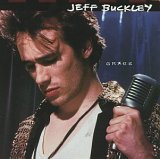
- From Kurt to Jeff.
Then came hallelujah sounding like mad Ophelia
for me in my room living
So kiss me, my darling stay with me till morning
Turn back and you will stay
Under the Memphis Skyline
Rufus Wainwright - “Memphis Skyline”
------
There are numerous points during the transcendental journey that is Grace, Jeff Buckley’s only completed studio album, which never fail to move me. But none will ever top that which occurs exactly 17 seconds into the recording, on the opening cut, “Mojo Pin.” For that is the very first entrance of his voice.
That voice.
It hangs for a long moment, suspended over one’s head, sounding so unlike any voice I have heard sing a note before or since that you’d be easily forgiven for not realizing that it is indeed a man singing, and not some angelic apparition. One of my other favorite singers, Bono, describes Jeff as “a pure drop in an ocean of noise,” and yet, there are still times on the record where voice, guitar and strings become so rapturously entwined together that such distinctions begin to lose all meaning.
I have listened to my well-worn copy of Grace at least one hundred times, such use interspersed with carefully administered loans to many friends. At present, it is in the hands of a colleague who I overheard listening to Rufus Wainwright at her workstation. Before delivering the album to her, I issued a warning that for most artists would be offered with a grain of salt. For Jeff, however, I could not have been more serious.
“This will change your life,” I said.
For how it has mine. It came into my possession almost accidentally. Soon after returning from a summer trip back to Australia—where Jeff gained far more mainstream recognition during his life than he did in the States—I purchased it on eBay, on a whim. It immediately became my primary source of all inspiration. Good music changes the way you feel; great music changes the way you feel. Grace not only best captures and relates to its listener in his most personal daily circumstance; it re-phrases and re-conceptualizes his life experience so that it begins to carry more meaning than one had previously conceived possible, making sentiments like jubilation, wonder, anger, sorrow and love far more real. Anything that I might remember feeling before Grace is now subconsciously understood through Grace. Like a lost sheep upon sighting his shepherd, I found Jeff’s trail soon after Kurt Cobain’s stopped carrying me past pubescence.
Though he may have been only a mysterious white boy, Jeff played soul music, first and foremost. His musical furnishing may have had more immediate genealogical ties to Led Zeppelin and Edith Piaf, but the force behind his art came through pious devotion at the altar of Black privation: Rhythm and Blues. He soaked in the darkest waters of its progenitors, learning his trade through Billie, Nina and Al Green, thus becoming as worthy a vessel of its timeless power as any “outsider” vocalist could hope to become. That he would ultimately combine this with the Sufi timbre of his self-proclaimed “Elvis,” Nusrat Fateh Ali Khan, inspired me to explore deeper within the music that I so dearly loved in an effort to discover the soul behind its sound.
Embarrassing as it is, I dared to name my short-lived high school rock band after one of his songs. We were, but of course, The Mojo Pins. Thankfully, our first and final gig at a local church did not include any covers of his songs. That most ill-advised of efforts was spared for a solo performance at a high school’s coffeehouse, where, with sweaty fingers and faltering falsetto, I tip-toed my way through an earnest version of “Last Goodbye.” It was in fact only a small piece of my multiple appearances that night, where I mixed angsty anti-Bush poems with several emo covers in a bid to strike at least a glimmer of sensitive-songwriter-Asian-white-boy gold with the eligible women in the audience. I didn’t, but have since justified this failure upon the stage crew’s inability to cart in the piano from the art room for my scheduled performance of Mozart’s “Six Variations in G on a Theme of Salieri,” a lady killer if ever there was one. Playing “Last Goodbye” did, however, introduce me to two of my best high school friends; fellow Jeff devotees with whom a devotion to his music and mourning of his passing would form the core of our friendship.
I recall dragging another close friend around the East Village on one of my first visits to the Big Apple, in search of Jeff’s early regular gig venue, a hole-in-the-wall café named Sin-e (“Shin-ay,” Gaelic for “That’s It”). After an extended period of fruitless searching, we finally came upon it, only to find that at 21 and over, our entry was not permitted. Forgoing disappointment, I lingered at Sin-e’s doorstep, peering in through the window and then closing my eyes, invoking the musical muse that had so profoundly shaken his traveling devotee. At the beginning of his first live E.P. (recorded inside the café), Jeff whispers: “this is a song about a dream” before launching into his signature croon. Well, reaching Sin-e had become my hajj, and I’d come here before: if not in prayer than certainly in dream. Standing on the sidewalk of that grimy, dark alley of a street, Jeff’s lingering presence for a moment brought into clarity more of the pain and frustration, the longing and bohemian wonder, the celebration and artistic hunger of the East Village and New York City than I would otherwise have ever known.
Grace crossed the Atlantic with me during a semester spent in London. On one of those most triumphant of Spring occurrences, which come so rarely as to elicit genuine joy throughout the entire city (and seemingly, British Kingdom), that is: when the sun momentarily breaks the shackles of its cloud captors, splashing her glorious light across Mother England’s pale brow, I celebrated with a stroll through Hyde Park. “Lover, You Should’ve Come Over” was washing its gospel yearning across my ears. At the very point where Jeff exalts: “Sometimes a man must awake to find that really…he has no one,” I noticed a small Indian girl playing innocently in the grass with her parents. It was such a slight, ordinary event, played out across millions of lives each day. But under the spell of this music, of this wrenching line, I became a bearer of an epiphany so much larger and more awesome than any Mass I ever sat through during childhood Catholic school. I felt closer to God than the existentialist-absurdist seminars I would attend years later could endeavour to re-distance me from, and basked in an impossibly fiercer love than the relationship-based narrative of “Lover” originally evokes.
The critic James Wood writes that reading Saul Bellow “is a special way of being alive.” In this case, listening to Jeff is an approximate experience, but one that not only intensifies one’s aliveness, but actually raises it beyond the realm of the subjective or symbolic and into an eternal place. One which, unlike heaven, remains grounded in all of the joyous treachery and miserable mortality of its human condition. In the penultimate chapter of Grace, Jeff screams: “There’s no time for hatred, only questions/Where is love, where is happiness, what is life, where is peace?”
The right reply, I have gradually but increasingly come to find, can be found in the living body of the original source itself. Qawwals, employing the extended, throaty ululations and modal melodies which Jeff would eventually stylize into a voice uniquely his own, bring their audience into a state of religious ecstasy and greater devotion through the power of their singing. An evening/car ride/drink with Grace then, is by leaps and bounds the most profound secular service an album has thus far proven to be for me. It feels slightly ironic, if unsurprising, that an artist like Jeff, who remains best known for his cover of Leonard Cohen’s “Hallelujah,” who named his only completed album after a phrase commonly associated with Christianity, and whose early passing and father’s inescapable shadow bring to mind another highly deified son, should detest organized religion.
In my own short, unfolding journey, it is the accompaniment of Jeff’s dreams and struggle for meaning that have breathed constant vitality into my own search for understanding of faith, meaning and above all else, love. As Daphne Brooks--who inspired me to write this love note--explains: more than anything else, Grace is an act of love. If this musician’s tragically short career is to be celebrated in some way, I would put forth that lives renewed be most appropriate. In which case, I am born anew with each listen. Again, and again, and again.
Wednesday, February 08, 2006
Oy Vegg!
- The True Confessions of an Eggonomic Hitman
Bad pun: 1. Cheesy, contrived, lame, “you so stoopid!” play-on-words known to be a common cause of irritation when repeated
2. Employment as a server at a restaurant called “Eggspectation”
I began the ingratiating journey from simple-minded civilian to well-eggquipped eggspert of all things Egg last Monday. In one marathon training session, I was provided with all manner of trade secrets into becoming a well-oiled waiting machine. The art of the up-sale, pivot points, how to wash my hands (apparently, servers have to wash their hands) and what constitutes seggsual harassment (apparently, men/cocks are not permitted to handle women/hen’s ‘eggs’ without permission these days) were all dealt with accordingly.
For dinner, our small group of future eggployees were served a selection of dishes to acclimatize us with the restaurant’s offerings, thereby allowing for at least half-truthful future recommendations. I found the 'Muffin Eggsplosion' pipped the Apple Pie Cheesecake as my favorite sweet dish. Most recently, I have taken to carrying my 24-page extended menu around on my person, hunting for pneumonic devices to differentiate the 'Eggsileration' morning special from the 'Uneggspected*.' I’m yet to try the Eggchilada, though, whose preparation this morning I greatly admired at the hands of small Mario, whose fellow Salvadorean colleague taught me to refer to him as “ciervito**.”
Although I’ve never waited before, I have bartended in London. Which is to say, I made kalimotos (wine and coke, hardly a garnished cocktail) for drunken Spaniards at private parties and snakebites for American college girls in London’s International Student House. Although a generally positive experience, the pedestrian nature of the work means that I’d be only a half step above the next sod in terms of mixology experience, and still an unbroken-in schmuck with three plates in my arms. In Ellicott City, however, the location alone earns one a degree of respect.
Amongst DC students, spending time in London is only slightly more noteworthy than visiting your parents in North Carolina over winter break. In fact, Georgetown students would raise greater eyebrows if one was to boast of exotic journeys to Wyoming (to visit the Cheney shrine perhaps; not to be confused with Yasukuni) or Idaho, far from the cosmopolitan cultural islands of Tokyo, Lagos or, most run of the mill of all, old London town. Such is the duality of living on the border of the political machinery of Washington and its surrounding tri-state corporate suburbatopia. In DC, my own background quietly mixed into the pulse of a whole city of fleeting encounters amongst cultural hop-skotchers, most of whom cross time zones as rapidly as Baltimore natives use Old Bay seasoning (all the time). Here, playing my Aussie card hand lends an artificial yet useful air of celebrity to my existence.
Now, with this short post-college stint back in the town in which I last lived during 12th grade, and at a restaurant which originates from Montreal but whose clientele is mostly from the immediate area, I have the opportunity to add some zesty Australian-Asian spice to this benign yet bland middle-class omelette. I could be the soy sauce accompaniment to Ellicott City’s mini crab cakes, if you will (actually, I probably wouldn’t). I’ve previously used being from somewhere unusual as a social tool for remembering my name, exploiting the gullible for good-natured laughs and so forth. However, this may be the first time I actually acquire tangible—and by tangible, I mean green and taxable—benefits from my home country’s favored reputation. The question is: do I really intend on unashamedly milking my background to beef up my measly supplementary income?
Why, like a farmer to his cow with teats pouring liquid gold, that’s what!
So, depending on my assigned, unassuming diner, they can look forward to a caricature-based variety of Markissed, Mark-glish linguistic dew drops, all loosely rooted around the history of British Empire and the wonderful language it forcefully instilled upon we Yellow yolk…I mean, folk.
For instance, when the host assigns me a 50-something WASPish couple, my razor-like waiter-brain will visualize the husband occasionally hosting distant cousins from Bournemouth and his wife enjoying PBS Dickensian TV adaptations (such as my mother’s recent addiction, “Bleak House”)...
“Good day Sir! How do you do Madame?! Excuse my nosiness, but may I inquire as to whether you have dined at our humble establishment prior to this most exquisite occasion?...Oh, how positively delightful!”, I shall intone, sounding like an Asia-fied Carlton from The Fresh Prince of Bel-Air.
Now as I toddle off to fix the couple their drinks (Earl Grey tea, they'd of course request), the table conversation would at this point have switched from tax cuts to tickled culture-guessing:
“My goodness! I wonder where he’s from! Doesn’t look English, does he? Sounds like a butler from ‘Bleak House!’…”
Later on, when deliberating over the tip, this unexpected rhetorical treat should result in a sympathy/surprise offering of at least 20 percent, 30 to 50 being ideal.
Or, alternatively, they could see through my mostly-artificial server identity, exclaim: “What sort of bad high-school production ballyhoo accent is that joker trying to put on?!” and neglect to tip at all. It’s all a bit of a gamble, really, but one that I’m sure shall make the routine and bad pun overkill of working at Eggspectation pass more merrily.
For large, rowdy weekend groups of young business sorts looking for some excitement, I could selectively employ my rough-and-tumble Australian tongue, the dialect I was raised speaking but which in more recent times only escapes my lips following several strong drinks or in the rare company of my compatriots:
“The Surf N’ Turf, mate? You bloody betcha I like it, it has to be almost as de-lish as barbequed Emu!...”
And when the topic of drinks comes up, and inevitable questions about the consumption of Fosters arise, I’ll use my role as charming sommelier to subtly turn their attention toward more premium offerings:
“Australian Shiraz certainly goes well with a kangaroo steak, but for your particular dish, might I recommend the ($449/bottle)1966 Chateau Margaux? We drink it all the time in Oz!”
I’ll admit that these dreamy, lucrative shenanigans are fanciful to the point of absurdity. More than likely, rather than delight and entertain my table with such verbal idiosyncrasies, I’ll simply confuse.
“Ba-narh-narh? What on earth is that? Is it a vegetable?...Ohhhhh, Bill, he means ‘Banana!’ (or, “ba-neh-ner” to the un-American ear), a guest will decipher with latent irritation. That is, before declining dessert altogether in favor of the check, in which she can show me what just what she thinks of my unintelligible variation of her beloved Mid-Atlantic coast vernacular.
Looking forward, how this all actually works out is going to be a useful case study in terms of gauging sources of future income. I hope to perform bartending/serving work similar to this in a variety of countries (and, with any luck, languages), and a successful stint in my adopted hometown would bolster my confidence considerably. Accelerating one’s immersion into a new environment can be done in a number of ways. Feeding and/or intoxicating locals, however, happens to be one of the most universal and personally appealing. There’s much that the self-anointed pop-anthropologist can discover through observing from behind the waiter’s apron: How do Americans eat crepes compared to the French? How do mute Ethiopians converse over a first date (the food being eaten without cutlery)? What is the real meaning behind General Tso, international man of mystery, and his chicken?
Irregardless, you can be sure that I’ll find it all an utterly eggcellent eggsperience...
And now that, dear friends, is a bad pun.
---------------
* In case you were wondering: the Uneggspected has steak, instead of chicken
** "Small donkey," from what I gathered
Monday, January 30, 2006
On Los Angeles:
- Two tales, one thesis, loads of unusual sex and debauchery.
Written in January, 2006.
I. Entry Point
Los Angeles to me has always been a fascinatingly conflicted place. As the starting point for my exploration of this nation, I remember my first glimpse of the sprawling urban maelstrom from the window of our plane. I had just turned 15, for the second time in two days, thanks to the wonders of 15-hour time differences and 12-hour flights. The anniversary of my birth happens to coincide with that of the (non-Native) United States, and as a bratty teen unleashed upon the consumer frenzy that the Phil Knight’s of the world whirl up so successfully through ingenious marketing campaigns, I had my eyes set on one birthday gift only: A pair of brand spankin’ new Air Jordan XIVs, at the delightful price of $150, U.S. (Then, in the harrowing pre-boom days of Australian mini-recession: roughly $230).
So, after settling into our room at the Westin Bonaventure, I dragged my family out to find the nearest shoe store in which to procure a pair of these sweet, holy foot-sheaths of the hardwood, worn by none other than God reincarnate, Mr. Jordan.
We ventured away from the towering financial skyscrapers amongst which our hotel was located, into the (unbeknownst to us) far shadier regions of Downtown. Before long, hunger intervened, and we made a stop for lunch, at none other than America’s golden temple of greasy triumph: McDonalds (or “Mackey-Ds,” as Australian youth refer to it). For this gluttonous emperor of corporate standardization, the cultural distinctions—beyond the gastronomical (I’d take Aussie McDonalds any day)—were eye opening: I saw my first real homeless person take the unused ketchup packet from my bag and consume it, shot-style. Upon dashing out, I remember the foreign sense of shock I felt at the clear economic disparities which surrounded me: the unfortunate chap sitting on cardboard around the corner, the snooty disdain in which a well-to-do woman glanced around her. We’d traveled at most a couple of blocks, but the almost instantaneous drop-off in wealth was like a North Dakotans first trip to the beach; the reality of the Angeleno underclass like a brutal wave crashing over my welfare state-coddled mind.
That evening, in the bar at the revolving tower atop the Bonaventure, I sipped on the most expensive glass of Coca-cola in my life as fireworks exploded before us, capping what was at the time the most significant birthday of my life. And though I would later be rewarded with those mightily over-priced Jordans—only the beginning of a thankfully short-lived sneaker collecting habit (call it “Air Cocaine”)—Los Angeles would for me always be remembered as a place of fundamental inequity.
----------
II. The King's Fool
It seems counterintuitive, but I received some of my juiciest background on Los Angeles from a farm boy who grew up in the Midwest.
“They’ve seen the Valley. They’ve seen Beverly Hills. They’ve been through Hollywood and they think they know L.A.”
Daniel pauses briefly, his jet-black non-coiffed ‘hawk falling over dark eyebrows, thin arms crossed across the table.
“…So he puts a picture of a fucken’ dollar store and a tiny taco truck up on his blog! Cos that’s what most of this city is made up of. And that’s what I fucken’ love about it!”
But later on in the conversation, talking to a fellow L.A. transplant originally from Chicago, he expresses consternation over the future of his adopted city:
“But now Silverlake just equals Williamsburg equals Silverlake…” he calculated, referring to the newly gentrified yuppie havens of L.A. and New York respectively, decrying the rapid homogenization of what once was fresh, what once may have been—dare I utter the phrase? —cool. As one who has had his eye on Williamsburg since visiting its Mandela-quoting street art alleys and alluring Asian-American female inhabitants last year, I feigned similar ennui at the swiftly changing face of both neighborhoods.
“Goddamn hipsters,” I muttered under my breath, wondering whether I should feel the slightest bit sheepish for owning a Member’s Only jacket.
Raised on a farm in Iowa, one would never have guessed that Daniel’s tenure in this most starry of cities amounts to roughly two years. It might be the effortless way in which he wears those remarkably tight black jeans. Or perhaps it’s his preference for Japanese glam rock and musical outfits whose passage-length names suggest a Faulkner-esque indifference toward brevity. Just to rub it in a little, he’s a 23-year-old who drives a motorbike to his job in Beverly Hills and has cartoonist friends who “are paid two hundred thousand to sit around in their studio watching DVDs.” Daniel is also adept at slipping too-perfect anecdotes on L.A.’s colorful demography and personality into conversation, including personal tales I can see etched into the smoky air outside the front door of hundreds of its bars:
“You wouldn’t believe how many times people call me, trying to pitch me their script! And I don’t even have anything to do with the selection process!” he laments.
I felt even stupider. Earlier in the evening, I’d just babbled excitedly to him about my (fanciful) thoughts on writing a biopic screenplay about the revolutionary guerilla leader and current president of the world’s newest nation. This was just after he had explained his current position at Participant Productions, financiers of recent acclaimed gems including “Syriana,” “Good Night and Good Luck,” and “North Country.”
“Think ‘Motorcycle Diaries’ meets ‘Hotel Rwanda,’” I had told him.
Following this ridiculous faux pas, I thoughtfully decided to consign myself to actually speaking only when the conversation approached subject matter of personal semi-authority. As the topics of hard-left political theory, British views on Irony and the ethnic dynamics of neither Malaysia nor Australia arose; I was more or less silent for the remainder of the evening. I did, though (perhaps as partial result), get past the first level on Donkey Kong on one of the circa-’81 arcade games the bar carried.
-------------
III. Drugs and Rock n Roll
My last visit to L.A. was part of a month-long Southwestern road trip, during which time I passed through the city a handful of times without ever really getting a handle on it. I was overwhelmed and unimpressed. L.A. struck me as a series of endless strip malls; a “produce and consume” society in which hurried lawyer’s wives chugged about, shoving nutrient-deficient drive-thru food down their gullets as their middle schoolers gossiped over which Hollywood flash-in-the-pan was at their mall after class. At the time, I had pigeonholed the city into a box exemplifying all that was wrong with American society and post-industrial capitalism. Poorly laid out, superficial and alienating, Los Angeles was like the set of cancerous lungs I had viewed in a cadaver exhibit at the city’s Natural History Museum: though the Marlboro Man zeitgeist of Hollywood culture had comprehensively intoxicated the world’s inundated mind, nowhere did I find the disease most advanced than in the carrying body itself. Naturally, I presumed, L.A. would be the first to fall victim to the poisoned onslaught of its own perfectly marketed excess and self-absorption.
Reductive and thoroughly undeveloped (if not wholly untrue), I came to reject this rather Marxist interpretation of the city this time around. Busing around town (literally, I didn’t seem to go anywhere) I found there to be several classic American themes which emanate across L.A.’s intestine-like highway system and the tangle of neighborhoods it envelops. Among them: Hollywood popular culture/film/cult of the celebrity, referred to by locals simply as “the Industry;” the simultaneous symbolism of individual freedom juxtaposed against slavish dependency upon the car; and the anarchic relations of applied libertarianism (an ideology which crosses partisan lines here).
To a degree, it’s all partially accurate: whilst there I met and knew of numerous Angelenos whose largest calling card is having a sister who partied with Paris Hilton. I’ve also not come across a comparable public transportation system so obstinate and utterly inept at carrying people around the city’s major locations. Indeed, in the 1930s, General Motors scrapped the city’s existing electric train system, creating L.A.’s famously congested auto dependency. And here, as Pico Iyer notes, everybody lives side by side without having any idea how she correlates or where she fits in relation to the next person.
However, the real clincher to all of this is the absolute hegemony of it all. The idea of Los Angeles, which at its core is the popular idea of post-World War II America, has a grip so uniformly entrenched throughout the minds of my generation that one can’t help but be swayed by its trans-national leveling power. Social mobility, the primacy of the individual and personal choice, maximalist living, the pursuit of self-perfection; within much of the world, these notions are now the philosophical bedrock of my fellow baby-of-baby-boomer generation. This is not so much about capitalist economics; it has more to do with complete cultural empire.
When the revolution eventually stalled in its decidedly un-groovy bastardization - Stalinism - and when our hippie parents grew bored with Karma and chose Commerce instead, it was Uncle Reagan, former Californian governor (and Aunty Thatcher), who was left to raise us. Los Angeles was our generation’s breastfeeding nanny, nursing us along with reruns of “Rocky” and spin-offs of “Clueless.” She watered down Reaganomics and offered us the powder milk version, flavoring the mixture with neo-McCarthyist rhetoric (“Evil Empire,” “lone superpower”) and consumer culture overdoses.
Besides being the headquarters of all of these dominant ideas, L.A.’s inhabitants follow a lifestyle that is freer, more ostentatious and more outsized than in any other place I’ve visited. They seem to approach life like a Sunday fish market: raw, aggressive, devoid of subtlety. I found this in the steely Korean woman who joked in Spanish with her stall neighbor in an all-Hispanic market. Then, in Koreatown itself, I found it in the attire of young professional Koreans, dressed out of a Vanity Fair magazine, sipping on Frappucinos purchased from a bilingual Starbucks menu. There were Hummers trundling along every highway. Nowhere that I visited did it seem that people could resist the allure of attaining pre-wrapped samadhi, each one living out their own (albeit, personally fashioned) global-by-way-of-American dream.
On the train ride out towards the suburbs of San Bernardino Valley, a group of colleagues frittered endlessly over countertop renovation choices and prices (apparently, if one isn’t getting frequent flyer miles from Home Depot, their family’s vacation time is suffering). On Sunset Boulevard in Silver Lake, a gay couple purchased the perfect final adornment for a dinner party at the specialty cheese store. The counterculture intelligentsia/vintage store brigade go at it endlessly on MySpace bulletin board battles. There’s no resistance when the resistance movement has been commodified, quite some years ago, and American Idol contestants are singing Iggy Pop.
Whether you’re on top of the system or in the middle of it, satirizing its absurdities or being marginalized by it, L.A. symbolizes the uni-paradigmatic essence of living in a postmodern 21st Century. This creed is equally persuasive today, if not more so, in other countries. Over dinner in Orange County, a senior administrator in the U.C. system told me of his surprise when China’s vice minister of Education divulged to him that her son is working for a billion dollar I.T. enterprise in Arizona. If ever we had a shot at maintaining peaceful relations with China, doping its youth into entering the global rat race might just be it. It already looks like the Indians are on board.
If I were a post-structuralist, I’d call it the “semiology of pursuit.” As a Baudrillard devotee, you could label it the “meta-narrative of purpose.” If you were George W. Bush, you could call it “free people doing freedom-type things.” An Angeleno could call it, well…”life.”
Fittingly, the show I viewed at the Museum of Contemporary Art annex in Little Tokyo was on the effects of ecstasy. One of the exhibits features a dozen psychedelic super-sized magic mushrooms and a blissed-out blue character patterned after Mickey Mouse, all crafted out of brightly painted plastic. MoCA’s curator, whilst giving a guided tour, explained the difficulty that museum staff had maintaining this particular exhibit.
“The kids will just hug and climb on top of the mushrooms,” he said, receiving the subdued bemusement of his artsy audience.
It seems quite clear to me that these children are simply following the suit of the current generation: my own. We're all seemingly on one massive, group trip in pursuit of an unattainable happiness, and nobody, it appears, is ready to let go for the inevitable come down.
Tuesday, January 03, 2006
New Year, New York
-Solving equations beneath the silver ball
The timer on Channel 1 had dipped below three minutes, both bartenders were occupied fixing drinks for other patrons, and my small party and I were entirely, frighteningly champagne-less. Save the solemn resolutions for another day (or year), all this particular reveler wanted for New Year’s Eve was to bring in the new millennium’s seventh anniversary by downing a glass of cheap bubbly.
My fears, naturally, were unfounded. Well before the midnight buzzer and our shoddy verbal countdown, I was sipping on champagne, so much so that by the time the ball dropped, I was already practically through my glass. But how sweet that beverage was, consumed as it was in East Village, lower Manhattan, New York City, surely the most magnificent example of modern man’s accomplishments, on this, my 21st New Year’s.
Like many others, my conception of NYE in NYC has been heavily derived from the screen more so than any other medium. In particular, by a famous scene involving two hookers, a Vietnam vet in a wheelchair, and a mentally challenged moral compass named Forrest. That seedy bar, that glittering hat, the antiquated celebratory scenes on the little television in the corner…rarely has a scene so inherently unappealing become so utterly intoxicating. Oh, what I would have done to bring in childhood New Year’s Eves in the company of two rowdy, drugged-out prostitutes and an embittered cripple!
My second most memorable, slightly less virtualized televised New Year’s memory was the millennial festive-leviathan that took place for the onset of 2000. I remember jumping about in my living room around 10:00 am on the 1st, swept up and far more excited at the scenes of smooching tourists in NYC and its descending silver ball than I was for Australia’s own celebration. Not even the gorgeous concert of golden fireworks exploding off of the Harbour Bridge could dislodge the big Apple as the true apple of my eye as far as end of year parties go. And, six years on, after finally experiencing my own NYNYs, I am beginning to see much further into the city’s universal appeal.
New York City is many things to millions of people. “Pleasant,” however, is rarely one of them. NYC might be glamorous, haughty, bewildering, obnoxious, unruly, cultured, and in my case, more fascinating in its minutia than its traditional showpieces, but simply “pleasant” it cannot be. Annapolis, Maryland, with its quaint bay and British lolly stores; Auckland, New Zealand, quietly tucked away, her residents striding across uber-cleanly designed streets; even Krakow, Poland, with her Gothic cathedrals and femme fatale blondes. Such places I might possibly refer to as “pleasant.” But never New York.
And Samuel Johnson may have been correct when he lamented several centuries ago that: “When a man is tired of London, he is tired of life; for there is in London all that life can afford.”
But surely he was only keeping the mantle warm for this town.
I see it as a matter of proportions. We humans spend the majority of our lives engaged in the mundane: eating cereal, reading headlines, paying rent, and so forth. And when we’re not doing that, we’re more often than not complaining to somebody else about the relative displeasure of such things:
"Blimey, my rice bubbles taste salty today…oh, so that’s not the sugar…Oh God, would ya look at the earthquake that hit Balochistan yesterday...what? Jemima didn’t pay for June!” and likewise.
With all this pent up boredom and ill will, and what with war, famine and penile enlargement spam mail appearing as impertinent to eradication as ever, it’s only natural that offered such a universal holiday, so many people wish to charge about the streets engaged in the most ridiculous of drunken shenanigans as possible.
Olympic games opening ceremonies? Eh…some don’t care for sports.
End to World War II? Bah…the few remaining SS generals were likely less than ecstatic.
New Year’s Eve? Surely even Osama and Eeyore and Morrissey uncorked a bottle at some point during the night.*
What makes New York City so perfect for the evening is its unrivalled existence as an entangled mass of multi-everything, combined with huge dollops of everything else. The holiday to be celebrated by everybody, set in the city which famously holds something from everybody, multiplied by the fact that every kind of person from every nation/culinary tradition/sweatshop manufacturer can be found there, and we encounter a socio-mathematical equation of such grand scope and intricacy that its solution must clearly only be attempted after at least a couple of shots, likely assisted by several wine bottle abacuses.
Included within this fantastical equation must be the following operators: the grit of the New York subway train seat; the way that the chisel-faced Indian man who runs the CVS off of Jamaica Boulevard has a Jamaica, Queens Jamaican accent, not just a regular Jamaican or Indian or…American, one.
The seismic variations and tribal demarcation of Manhattan girls versus Queens girls versus Brooklyn girls. And in particular, that delightful integer known as the vintage shirt wearing, pretentious art space-populating, hip hop-shaking indie-girls of Williamsburg. (It happens to be my favourite.)
Also factored in should be the singing of early 90s rock ballad classic, “Summer of 69”, at the top of my lungs in an empty Karaoke bar on the same street where the pioneers of punk once spat their holy saliva and legions of hangers-on faithfully followed, then encoring it as I walked to the subway with off-key versions of Whitney Houston and Snow numbers (remember that “Informer” joint? Oh yeah, I did go there) with only the hint of eyebrow reactions from street-wise urbanites.
Not to forget the way New Yorkers speak Mandarin in Chinatown, Italian in Little Italy and on this particular night, British English everywhere one goes.
Then divide this by the constant struggle to maintain mindfulness and peace under the steady over-stimulated bombardment of pedestrian traffic.
This, factored to the power of the individual wanderers’ unlimited freedom, the toleration of mass consumerism, and subtract one’s envy and abhorrence in equal amounts of the super id pretensions of the glitterati and business elite, derived one thousand times by the social impetus of New Year’s celebrations.
And you don’t really get anything now do you? Because, naturally, mathematicians of varying levels of metaphor could never hope to ‘solve’ the New York New Year’s phenomenon. Rather, one has to throw herself into the beastly bathing waters of the city’s over-crowded tub, and whilst slowly steaming in the conflicting flavors of this stew of humanity, must overlook her putrid, teeming ugliness only to find it outmatched by the hidden subtlety of humanity’s divine beauty.
Here’s to a brighter, more peaceful, more unified year than the last one.
----
*Ok ok, so non-drinkers and small children I exempt from this claim. Folks on the lunar calendar don’t count. I’m Chinese…I have veto power.
Friday, December 23, 2005
Mark and the Giant Watermelon
When I was about eight, on me second or third trip home to Klias in Sabah in Borneo Island, my family bought a giant watermelon. It was possibly accompanied by the persistently-popular prawn/shrimp crackers, (whose artificial flavors run universal between the fingers of children throughout the South Pacific seas) jack fruit, ramputan, and durian. These are all very tropical, very delicious fruits whose size, shape, tactile quality and scent are highly distinguishable. We probably cut up a pig back home as well. My father and his brothers' (all 74 of them...or 11, I can't remember) would go wild boar hunting when he was little. And Yong's mother, my rather ill-tempered Aunt, would have slaughtered a couple of chooks who would be served with apples placed by their necks. I remember the gentle stream of blood mixing with water as she washed them out into the drain on the side of their house, as I dashed around shooting Malvin with a newly-purchased plastic water pistol. He would have been four, and hilariously/dangerously uncouth towards my grandfather, who would have been 94 or so (he lived to be 99, but nobody's really sure, because he made up his age when he arrived in Malaysia as an indentured labourer). It was Chinese New Years, and "Gong Xi Fa Choi!" (Happy New Year!) songs was blaring out of the television, the house was decked out with bright red lanterns as well as ung-bao packets (money gifts) and firecrackers and moon cakes.
But I am meandering. The story I meant to share with you involves only the giant watermelon. Context is secondary.
The four-wheel drive (SUV) pulled up in the front driveway, a dusty grey road filled with stones that hurt when you walked barefoot but made terrific projectiles for boys to be boys with (I would later nearly blind my cousin Yong with one of them days before he flew home to live with us). We hopped out--my family, one Uncle, some cousins, possibly an Aunt, and began to carry fruits and fireworks and other Chinese New Year essentials into the house, a ramshackle two-story behemoth whose bathroom hygeine-levels scared the living daylights out of me. Being eight, I was eager to prove my physical strength to others, and this watermelon--though certainly large and difficult for my hands and stomach grasping action to control--was to be taken in by nobody else. I shooed off the others with arrogant disdain.
"I can do it! Let me do it! I can do it!" I scolded, as Dad shook his head, slightly unsure of his son's ability to carry what was to be an essential element of the Hiew family's New Year's feast that year. But, to my great surprise, he only shook his head slightly, gathered shopping bags and headed indoors. After scrapping with the watermelon for a few moments, I looked up, and found that absolutely nobody was outside. It was simply me, Mark, and a watermelon that when placed tall-side up, would have come past my chest.
Now by the left hand side of this house was a giant pit. Not like the volcanic sort that one finds in Los Angeles, but one far more artificially toxic. It's certainly a large hole, more like a steep, semi-natural valley that could have been forged by a landslide or a Japanese bomb during the War or the Hiew family's ancestors. I'm not really sure. The point is though that far too much of Malaysia's countryside is awfully polluted, and this pit was a case in point. It was absolutely filled with plastic shopping bags.They may have been multicoloured and from a variety of stores in town, but they were certainly not of any type of aesthetic appeal. Shopping bags and food scraps, I believe. And the dogs (oh the dogs!) would go rummaging around there all day, then come back inside the house, flea-ish and nasty and wiping muck all over the chairs, and nobody seemed to notice!
It was nothing but a giant eyesore; one that would constantly lead me to wonder: "Why did my extended family throw all those bags down there?" And "What sort of fun would it be for me to roll down that massive slope?"
Now on this occasion, the car was parked particularly close to the beginning of the drop-off between the front yard-ish region of the house and this gaping pit. After several anxious minutes of tugging and re-tugging, I quickly realized that this giant watermelon would not be lifted by my small arms that day. Admitting partial defeat, but far too vain to ask somebody older to take it in, I decided--rather rashly and in particularly poor judgment--to employ the "roley-poley" technique. Much like walking a chair across a room leg by leg, or more accurately, a Camusian snowball up a slope, I stooped down low and began to slowly push the oversized, sweet mother of goodness towards home. Those open front doors were my goal, and by george, that green football was going to sail through those posts, even if it did involve thick layers of filthy dust and dog poo!
Problem was, and you have likely guessed it, that large oblongish watermelons do not roll straight. They wobble. A lot. This particular one wobbled so much that it began to take a dangerous course, veering to the left of its prescribed path and then suddenly, horrifyingly, over the precipice of the gaping pit of plastic rubbish bag doom.
I literally gasped. "Mum will not like this", my mamma's boy eight-year-old mind squealed.
There was only one thing to do. I leapt down the precipice like Indiana Jones, chasing after the tumbling green orb as it bounced down the steep hill, knocking into small roots, picking up then discarding toxic blue grocery bags, and gathering pace all the time. Now I was quite quick back then, and I managed to catch it before it got down even half way down the hill.I clutched that watermelon like it was my life savings in a piggy bank during the Great Depression. And yet, after sliding along such dusty terrain, it had become incredibly slippery. My hands, to exacerbate the situation, were sweaty and kiddish. Alas, these two conditions combined meant that I dropped the watermelon just as I began hauling myself back up the hill, and this time, I did not catch it again. In fact, at one point during my second chase, I fell down. And tumbled. Like the watermelon.
And in response to the question I had up until then been asking myself: doing roley-poleys down a disgusting, trash-filled hole of colouful crap is not fun.
Nor was dragging that precious nugget of black-pipped, red-fleshed nectar all the way back to the house from the bottom of the hill.
I try to imagine the expression on my face upon delivering the watermelon back to my father, standing at the kitchen, cracking open peanuts with his siblings.There is Chinese New Year music on the television above me. Chickens are cooking, women are laughing. It's hot as all hell. I am so far from 'home', yet feel so surrounded by 'home.'
I am grinning, and it is the cheekiest, most rueful grin I have ever grinned before.
Sunday, December 18, 2005
Everything You'll Be
- The "I finished College" round-up.
“Basically, any country which hates America, he’s buddy buddy with.”
And so ended my final class period at the University of Maryland, on an ineffectual rant by an anti-Hugo Chavez chap in a marle-grey “Maryland’ sweatshirt doing a presentation-turned-soapbox on Venezuela for extra credit.
I had a surprisingly faint desire to raise rowdy objection: “As co-founder of the DC underground Chavista movement, I hereby stamp the mighty red flag of the Oppressed into your Yanqui imperialist heart. Muahahaha (ha…ha)” I heard myself scream.
But instead, I continued surfing news headlines on my laptop. Depressingly, I couldn’t even muster the sincerity to pay attention to my disconnected peers in this, my ultimate lecture. Perhaps fittingly as far as career path goes, it was in ECON315: “Economic Development of Underdeveloped Countries.” But of all the minds and ideas that I have encountered in my time in college, of all the moments where I’ve stepped out of a classroom with head swimming in re-evaluated thoughts or punch drunk on a fresh theory, it was completely inappropriate for me to go out with this class. The teacher, who is a Latin American PhD candidate, is a right-leaning free trade sympathizer who has announced his desire to jump ship on his home country for the plasma TV-owning lifestyle of the World Bank technocrat, citing his hopeless pessimism in Argentina’s ability to curb pervasive corruption. This, in a classroom filled with at least a proportion of students whom I hope are actually interested in doing something about, you know, the economic development of underdeveloped countries. Beyond that, however, his devastatingly ineffective efforts at lecturing—employing frequent 10-second silences as he stammered his way to some over-qualified response to an elementary question; his less-than-stellar exam question grammar:
”The Solow model predict absolute convergence that is all countries will end up with the same GDP per capita if and only if…”
…and his drastic simplification of a 750-page tome’s worth of relevant material into cartoonishly superficial PowerPoint’s offered little to sub-zero intellectual inspiration.
But it wasn’t always so. Indeed, as I prepare to walk the stage next week, cap and gowning the end to this small, collegiate chapter of my life, I reflect on the events and lessons I might actually want to remember some years from now.
If one were to chart my college journey, the variables would likely involve political spectrums and identity conceptualizations.
My freshman year saw me dive headfirst into activism. Coming from the Republican quagmire of suburban Howard County, I entered university with 1968 on my mind and a yearning for some “Capitalism is rubbish” conversation. I recall the heady rush of the first Peace Forum meeting, where a colourful coalition of peaceniks, Red Guard uniformed socialists, conservative ‘hostiles’ and interested kids like myself discussed the recently elected Bush Jr. administration’s aggressive vision for the Middle East. What followed was a whirlwind of tabling, teach-ins, fundraisers, debates, and protests, protests, protests. Whether traveling en masse to large-scale United for Peace and Justice demonstrations in D.C. or leading midday campus walk-outs and die-ins, I became well-versed in the rhythmic plastic bucket beats of protest drumming and catchy chants such as:
“Hell No! We won’t go! We won’t fight for Texaco!”
I recall the night that the “Shock and Awe” campaign began, huddled in the dorm room of fellow peace activist Rohinna, recoiling in horror at the televised sight of the very actions we had dedicated our 18-year-old hearts and souls into preventing. An ROTC floor mate, whose front door was emblazoned with pro-War propaganda extending far beyond the peace sign scarf which adorned mine, blasted Outkast’s “Bombs over Baghdad” that night. Others on my floor became enthused at the fighter plane love-fest being paraded across the broadcast media: “We’re gonna fuck the hell out of them!” one exclaimed, much like he might concerning a rival football team or an invading enemy on a Playstation game, and not the children of Iraq.
It could have been that very night which led me toward the field of peacebuilding, or towards the post-conflict reconstruction of East Timor two years later.
Though I flirted with other progressive issues, including contract struggles for university workers, environmental conservation, and building a revolutionary socialist party, I settled on my major pet issue in global HIV/AIDS. A petri dish for social justice affairs, fighting this torrid epidemic has brought me into solidarity and friendship with a variety of minority groups from many walks of life. Zackie Achmat, the Mandela of the movement in South Africa, revealed his organizing tactic to me over breakfast at Afterword café one breakfast (“We just did it!"). Youth peer counselors from Nigeria and Botswana, HIV-positive members of ACT UP New York, reproductive health providers from Portugal, spoken word poets from Baltimore and many a public health EuroNGOer* in Brussels; all have been bright jewels in my evolving understanding of this ruthless virus and the beautiful resistance of humanity it has spurred. My mentor, now an organizer in New York City, told me that even if our organization crumbles, the movement will live on, because “it’s strong as hell.”
Revitalizing the then-defunct Student Global AIDS Campaign chapter at my campus, and seeing it flourish into one of the University’s most prominent student organizations is the closest thing to a legacy I will leave behind.
Behind the activism there was always the ideology. Intellectually, I spent the majority of my college years is psycho-political resistance, intoxicated with the great ideas of Marx and his followers. Ecological anarchism, Trotsky’s permanent revolution, Gramscian hegemony, and Lukacs’ “History and Class Consciousness” were the order of my internal debate, as I analyzed the alienation and reification displayed by my fellow students: wearing “in” Che and CCCP shirts, watching Superbowl advertisements, eating Taco Bell in the food court. In London, I paid my respects at Marx’s grave in Highgate Cemetery, writing an unashamedly ambitious reflection about how the term “Markism” might sound as the future Marxism (!) Later, in Las Vegas, I would lament the symbolic virtuality of the casino complexes “The Venetian” and “Paris,” using the post-modern ideas of French philosopher Jean Baudrillard as my chalk board.
Soon afterwards, like thousands of young students before me, I stopped seeing the revolution, rejected rejection and finally decided to enter into “the system.” Though part of me (the rational, Asian side) regrets not spending time reading more practical subject matter, I like to justify my two year flirtation with radical politics as a testament to the heady idealism of youth.
More so than anything else, attending the University of Maryland provided context. As much of a mainstream liberal bubble as it is, and as privileged as many of the students still are, it is far more diverse than the unaffordable political office feeder institutions inside D.C. It was here that I got my taste of real J.A.P.s**, Long Island frat boys, sororitutes and other factions of the lowest common denominator that it would be more PC to not lump together, but far less satisfying. Though I am leaving College Park only now, I departed from its seedy, beer-pong-infested shores in spirit several years ago, and it’s the drunken loutishness and “Fuck Duke!” tribalists I have most to thank for facilitating this abridged emigration. The Food Co-op, sanctuary of progressive cuisine and spicy soundtracked sandwich lines, has been an island oasis within a sea of fast-paced materialism; devoted faculty and an opportunist’s bounty of extracurricular activities provided me with the monotony-breaking hobbies of meditation and salsa. Most importantly, I've learned what it is to be Australian, to live in America, to be upwardly mobile, about where one fits into the class and stratification of today's world.
So fare well, College Park, and stay classy. It’s been a good three and a half years, and I’ll look back with some satisfaction at what we’ve shared. And, in disjointed fashion, I'll finish by noting that where in previous times I would have jumped to the defense of anti-imperialist Generalissimo Chavez at the slightest hint of bourgeois elite critique, today, I'd rather work towards something far more constructive.
--------
*European non-governmental organization
**Jewish American Princesses, not to be nor easily confused with Japanese nationals
Thursday, December 01, 2005
Presenting Ambition
It has been said that there are two kinds of people in this world: lovers and cynics. I’ve always been far more partial to the former; journals filled with awful high school poetry and a “Global Partnership for Effective Assistance” calendar presently hangs over my shoulder as artificial testament. But in recent discussion, a number of mates have commented on my losing the fluffy white edges of unbridled idealism since the beginning of our friendships throughout college, attaining an element of pragmatism which has certainly provided a valuable reality check to put in my wallet next to the “Be the change you wish to see” and “Love is all you need” personal IDs.
Well that’s not really all that surprising. College, after all, is expected to mould naïve, “yeah, bro” 17-year-olds into battle-ready, confident professionals: pressed, shaped and critically-analyzed out for life-long career success. So as I enter into the final fortnight of my undergraduate degree, as my forays around campus acquire a tinge of near-nostalgia, it’s refreshing to see College Park out in reverse. Indeed, far from tidying up my non-existent professional portfolio or perfecting my job interview persona, I’ve set out upon a rather vain, infinitely juvenile mission which simply glows with man-child escapism.
I’ve recently dedicated myself to becoming one half of the most sickeningly cute couple of all time.
Not content with winning small scholarships for my high school’s future UMD students, nor with today’s front page phallic glory, this week has seen significant strides towards achieving this tongue-in-cheek loftiest of dreams. Sure there’s Brad and Angelina (or is there? I really couldn’t tell you), Rodin’s couple from “The Kiss,” or even Sonny and Cher, but this new flame and I are making ground fast. Last night, David, a lovable gay opera singer of a friend, was driven to near-physical rebuke at the jealousy our split-earphone Podcasted disco dance out of the metro station did invoke. And this afternoon—following my delivery of a rose and a purple peacock-feather ring—Her young boss whispered “SO CUTE!” as we sauntered out of the office in the direction of the city’s Congressional buildings.
Inextricably linked to all this, however, is the romance. The Fred Astaire/George Clooney/Jeff Buckleyization of my past three weeks has seen notable shifts in my psychological process. Mostly, this has taken the form of simple reductivism: where before I would plan ahead according to homework assignments, friends’ parties, meditation, sleep and the like, now there is 1. Time with Her, and 2. Time without Her. Where previously I would spend valuable commute time wading thoughtfully through my latest wannabe-music-critic playlist and browsing New Yorker articles, I now return to the one single collection of songs I created for her (our relationship was soundtracked and re-soundtracked by myself diligently over Thanksgiving), entitled: “Aussies Know Best.” And where haughty anti-consumerism once placed me above Holiday season fetishism, I now daydream endlessly about where more tweed could possibly fit best within her already achingly-hip wardrobe.
According to my guide points, we’re working at a steady clip between infatuation and perfection, balancing amicably on that thin line between “sickeningly cute” and simply “sickening.” Examples of text message highlights include the following:
”Also, I think you are cool. In addition, I like u a lot…”
Which I followed up the following early morning with:
“I think youre adorable.”
Email subject lines are even better (or worse, according to the audience): “Smitten” and “Cupcake” being the most egregious offenders. We trade Neruda quotes in between developing innovative theses on political philosophy, one of a startling array of mutual passions. After a disappointing year of dating half-leads, it appears that this self-deprecating writer has struck gold (literally, as in the color of her shoes). I find myself eyeing her curiously over dinner, silently shaking off the lingering disbelief at my stumbling upon such a well-informed, oppression-busting, fiendishly cute Wilco fan of an East Timor activist who “admits” to having a crush on me and actually enjoys my verbosity.
We haven’t quite reached Advanced level at kissing as we walk, but I justify that by arguing that a certain oft-neglected romance is found in the smear of saliva upon nose/cheek/shirt collar/lips.
Similarly, I attempted to give her Lesson #1 on the embattled artform of Australian English, but she declared a desire to continue pronouncing “Australian” in her rarified Phoenixian tongue.
“So sickening/ly cute!” I hear you say.
During T-WOH (Time Without Her), I am notified daily about the tangible glow her presence has provided my cheeks. Personal conversations—without challenge, and much like this entry—devolve into revelatory gushing sessions in which I blabber over everything from her Winona Ryder’s niece-like beauty to her remarkably progressive Christianity down to the name of her iPod (“W”). I smile that stupid-ass ear-to-ear grin at the slightest mention of her name. While volunteering at my Food Co-op, I even visualized her small face as I scooped deep-fried falafels out of the pot.
And to think, it’s only been three weeks. World domination already appears to be a foregone conclusion.
-------
On another note, Happy World AIDS Day. I made possibly my final appearance as a panel speaker for Student Global AIDS Campaign and Advocates for Youth, and will undoubtedly miss playing the small role I did within such outstanding civil society organizations.
Subscribe to:
Posts (Atom)


