Monday, February 13, 2006

Kangaroo Boy


- From Kurt to Jeff.

Then came hallelujah sounding like mad Ophelia
for me in my room living
So kiss me, my darling stay with me till morning
Turn back and you will stay
Under the Memphis Skyline

Rufus Wainwright - “Memphis Skyline”

------

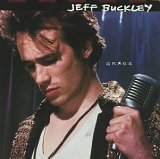
There are numerous points during the transcendental journey that is Grace, Jeff Buckley’s only completed studio album, which never fail to move me. But none will ever top that which occurs exactly 17 seconds into the recording, on the opening cut, “Mojo Pin.” For that is the very first entrance of his voice.

That voice.

It hangs for a long moment, suspended over one’s head, sounding so unlike any voice I have heard sing a note before or since that you’d be easily forgiven for not realizing that it is indeed a man singing, and not some angelic apparition. One of my other favorite singers, Bono, describes Jeff as “a pure drop in an ocean of noise,” and yet, there are still times on the record where voice, guitar and strings become so rapturously entwined together that such distinctions begin to lose all meaning.

I have listened to my well-worn copy of Grace at least one hundred times, such use interspersed with carefully administered loans to many friends. At present, it is in the hands of a colleague who I overheard listening to Rufus Wainwright at her workstation. Before delivering the album to her, I issued a warning that for most artists would be offered with a grain of salt. For Jeff, however, I could not have been more serious.

“This will change your life,” I said.

For how it has mine. It came into my possession almost accidentally. Soon after returning from a summer trip back to Australia—where Jeff gained far more mainstream recognition during his life than he did in the States—I purchased it on eBay, on a whim. It immediately became my primary source of all inspiration. Good music changes the way you feel; great music changes the way you feel. Grace not only best captures and relates to its listener in his most personal daily circumstance; it re-phrases and re-conceptualizes his life experience so that it begins to carry more meaning than one had previously conceived possible, making sentiments like jubilation, wonder, anger, sorrow and love far more real. Anything that I might remember feeling before Grace is now subconsciously understood through Grace. Like a lost sheep upon sighting his shepherd, I found Jeff’s trail soon after Kurt Cobain’s stopped carrying me past pubescence.

Though he may have been only a mysterious white boy, Jeff played soul music, first and foremost. His musical furnishing may have had more immediate genealogical ties to Led Zeppelin and Edith Piaf, but the force behind his art came through pious devotion at the altar of Black privation: Rhythm and Blues. He soaked in the darkest waters of its progenitors, learning his trade through Billie, Nina and Al Green, thus becoming as worthy a vessel of its timeless power as any “outsider” vocalist could hope to become. That he would ultimately combine this with the Sufi timbre of his self-proclaimed “Elvis,” Nusrat Fateh Ali Khan, inspired me to explore deeper within the music that I so dearly loved in an effort to discover the soul behind its sound.

Embarrassing as it is, I dared to name my short-lived high school rock band after one of his songs. We were, but of course, The Mojo Pins. Thankfully, our first and final gig at a local church did not include any covers of his songs. That most ill-advised of efforts was spared for a solo performance at a high school’s coffeehouse, where, with sweaty fingers and faltering falsetto, I tip-toed my way through an earnest version of “Last Goodbye.” It was in fact only a small piece of my multiple appearances that night, where I mixed angsty anti-Bush poems with several emo covers in a bid to strike at least a glimmer of sensitive-songwriter-Asian-white-boy gold with the eligible women in the audience. I didn’t, but have since justified this failure upon the stage crew’s inability to cart in the piano from the art room for my scheduled performance of Mozart’s “Six Variations in G on a Theme of Salieri,” a lady killer if ever there was one. Playing “Last Goodbye” did, however, introduce me to two of my best high school friends; fellow Jeff devotees with whom a devotion to his music and mourning of his passing would form the core of our friendship.

I recall dragging another close friend around the East Village on one of my first visits to the Big Apple, in search of Jeff’s early regular gig venue, a hole-in-the-wall café named Sin-e (“Shin-ay,” Gaelic for “That’s It”). After an extended period of fruitless searching, we finally came upon it, only to find that at 21 and over, our entry was not permitted. Forgoing disappointment, I lingered at Sin-e’s doorstep, peering in through the window and then closing my eyes, invoking the musical muse that had so profoundly shaken his traveling devotee. At the beginning of his first live E.P. (recorded inside the café), Jeff whispers: “this is a song about a dream” before launching into his signature croon. Well, reaching Sin-e had become my hajj, and I’d come here before: if not in prayer than certainly in dream. Standing on the sidewalk of that grimy, dark alley of a street, Jeff’s lingering presence for a moment brought into clarity more of the pain and frustration, the longing and bohemian wonder, the celebration and artistic hunger of the East Village and New York City than I would otherwise have ever known.

Grace crossed the Atlantic with me during a semester spent in London. On one of those most triumphant of Spring occurrences, which come so rarely as to elicit genuine joy throughout the entire city (and seemingly, British Kingdom), that is: when the sun momentarily breaks the shackles of its cloud captors, splashing her glorious light across Mother England’s pale brow, I celebrated with a stroll through Hyde Park. “Lover, You Should’ve Come Over” was washing its gospel yearning across my ears. At the very point where Jeff exalts: “Sometimes a man must awake to find that really…he has no one,” I noticed a small Indian girl playing innocently in the grass with her parents. It was such a slight, ordinary event, played out across millions of lives each day. But under the spell of this music, of this wrenching line, I became a bearer of an epiphany so much larger and more awesome than any Mass I ever sat through during childhood Catholic school. I felt closer to God than the existentialist-absurdist seminars I would attend years later could endeavour to re-distance me from, and basked in an impossibly fiercer love than the relationship-based narrative of “Lover” originally evokes.

The critic James Wood writes that reading Saul Bellow “is a special way of being alive.” In this case, listening to Jeff is an approximate experience, but one that not only intensifies one’s aliveness, but actually raises it beyond the realm of the subjective or symbolic and into an eternal place. One which, unlike heaven, remains grounded in all of the joyous treachery and miserable mortality of its human condition. In the penultimate chapter of Grace, Jeff screams: “There’s no time for hatred, only questions/Where is love, where is happiness, what is life, where is peace?”

The right reply, I have gradually but increasingly come to find, can be found in the living body of the original source itself. Qawwals, employing the extended, throaty ululations and modal melodies which Jeff would eventually stylize into a voice uniquely his own, bring their audience into a state of religious ecstasy and greater devotion through the power of their singing. An evening/car ride/drink with Grace then, is by leaps and bounds the most profound secular service an album has thus far proven to be for me. It feels slightly ironic, if unsurprising, that an artist like Jeff, who remains best known for his cover of Leonard Cohen’s “Hallelujah,” who named his only completed album after a phrase commonly associated with Christianity, and whose early passing and father’s inescapable shadow bring to mind another highly deified son, should detest organized religion.

In my own short, unfolding journey, it is the accompaniment of Jeff’s dreams and struggle for meaning that have breathed constant vitality into my own search for understanding of faith, meaning and above all else, love. As Daphne Brooks--who inspired me to write this love note--explains: more than anything else, Grace is an act of love. If this musician’s tragically short career is to be celebrated in some way, I would put forth that lives renewed be most appropriate. In which case, I am born anew with each listen. Again, and again, and again.

Wednesday, February 08, 2006

Oy Vegg!

- The True Confessions of an Eggonomic Hitman

Bad pun: 1. Cheesy, contrived, lame, “you so stoopid!” play-on-words known to be a common cause of irritation when repeated
2. Employment as a server at a restaurant called “Eggspectation

I began the ingratiating journey from simple-minded civilian to well-eggquipped eggspert of all things Egg last Monday. In one marathon training session, I was provided with all manner of trade secrets into becoming a well-oiled waiting machine. The art of the up-sale, pivot points, how to wash my hands (apparently, servers have to wash their hands) and what constitutes seggsual harassment (apparently, men/cocks are not permitted to handle women/hen’s ‘eggs’ without permission these days) were all dealt with accordingly.

For dinner, our small group of future eggployees were served a selection of dishes to acclimatize us with the restaurant’s offerings, thereby allowing for at least half-truthful future recommendations. I found the 'Muffin Eggsplosion' pipped the Apple Pie Cheesecake as my favorite sweet dish. Most recently, I have taken to carrying my 24-page extended menu around on my person, hunting for pneumonic devices to differentiate the 'Eggsileration' morning special from the 'Uneggspected*.' I’m yet to try the Eggchilada, though, whose preparation this morning I greatly admired at the hands of small Mario, whose fellow Salvadorean colleague taught me to refer to him as “ciervito**.”

Although I’ve never waited before, I have bartended in London. Which is to say, I made kalimotos (wine and coke, hardly a garnished cocktail) for drunken Spaniards at private parties and snakebites for American college girls in London’s International Student House. Although a generally positive experience, the pedestrian nature of the work means that I’d be only a half step above the next sod in terms of mixology experience, and still an unbroken-in schmuck with three plates in my arms. In Ellicott City, however, the location alone earns one a degree of respect.

Amongst DC students, spending time in London is only slightly more noteworthy than visiting your parents in North Carolina over winter break. In fact, Georgetown students would raise greater eyebrows if one was to boast of exotic journeys to Wyoming (to visit the Cheney shrine perhaps; not to be confused with Yasukuni) or Idaho, far from the cosmopolitan cultural islands of Tokyo, Lagos or, most run of the mill of all, old London town. Such is the duality of living on the border of the political machinery of Washington and its surrounding tri-state corporate suburbatopia. In DC, my own background quietly mixed into the pulse of a whole city of fleeting encounters amongst cultural hop-skotchers, most of whom cross time zones as rapidly as Baltimore natives use Old Bay seasoning (all the time). Here, playing my Aussie card hand lends an artificial yet useful air of celebrity to my existence.

Now, with this short post-college stint back in the town in which I last lived during 12th grade, and at a restaurant which originates from Montreal but whose clientele is mostly from the immediate area, I have the opportunity to add some zesty Australian-Asian spice to this benign yet bland middle-class omelette. I could be the soy sauce accompaniment to Ellicott City’s mini crab cakes, if you will (actually, I probably wouldn’t). I’ve previously used being from somewhere unusual as a social tool for remembering my name, exploiting the gullible for good-natured laughs and so forth. However, this may be the first time I actually acquire tangible—and by tangible, I mean green and taxable—benefits from my home country’s favored reputation. The question is: do I really intend on unashamedly milking my background to beef up my measly supplementary income?

Why, like a farmer to his cow with teats pouring liquid gold, that’s what!

So, depending on my assigned, unassuming diner, they can look forward to a caricature-based variety of Markissed, Mark-glish linguistic dew drops, all loosely rooted around the history of British Empire and the wonderful language it forcefully instilled upon we Yellow yolk…I mean, folk.

For instance, when the host assigns me a 50-something WASPish couple, my razor-like waiter-brain will visualize the husband occasionally hosting distant cousins from Bournemouth and his wife enjoying PBS Dickensian TV adaptations (such as my mother’s recent addiction, “Bleak House”)...

“Good day Sir! How do you do Madame?! Excuse my nosiness, but may I inquire as to whether you have dined at our humble establishment prior to this most exquisite occasion?...Oh, how positively delightful!”, I shall intone, sounding like an Asia-fied Carlton from The Fresh Prince of Bel-Air.

Now as I toddle off to fix the couple their drinks (Earl Grey tea, they'd of course request), the table conversation would at this point have switched from tax cuts to tickled culture-guessing:

“My goodness! I wonder where he’s from! Doesn’t look English, does he? Sounds like a butler from ‘Bleak House!’…”

Later on, when deliberating over the tip, this unexpected rhetorical treat should result in a sympathy/surprise offering of at least 20 percent, 30 to 50 being ideal.

Or, alternatively, they could see through my mostly-artificial server identity, exclaim: “What sort of bad high-school production ballyhoo accent is that joker trying to put on?!” and neglect to tip at all. It’s all a bit of a gamble, really, but one that I’m sure shall make the routine and bad pun overkill of working at Eggspectation pass more merrily.

For large, rowdy weekend groups of young business sorts looking for some excitement, I could selectively employ my rough-and-tumble Australian tongue, the dialect I was raised speaking but which in more recent times only escapes my lips following several strong drinks or in the rare company of my compatriots:

“The Surf N’ Turf, mate? You bloody betcha I like it, it has to be almost as de-lish as barbequed Emu!...”

And when the topic of drinks comes up, and inevitable questions about the consumption of Fosters arise, I’ll use my role as charming sommelier to subtly turn their attention toward more premium offerings:

“Australian Shiraz certainly goes well with a kangaroo steak, but for your particular dish, might I recommend the ($449/bottle)1966 Chateau Margaux? We drink it all the time in Oz!”

I’ll admit that these dreamy, lucrative shenanigans are fanciful to the point of absurdity. More than likely, rather than delight and entertain my table with such verbal idiosyncrasies, I’ll simply confuse.

Ba-narh-narh? What on earth is that? Is it a vegetable?...Ohhhhh, Bill, he means ‘Banana!’ (or, “ba-neh-ner” to the un-American ear), a guest will decipher with latent irritation. That is, before declining dessert altogether in favor of the check, in which she can show me what just what she thinks of my unintelligible variation of her beloved Mid-Atlantic coast vernacular.

Looking forward, how this all actually works out is going to be a useful case study in terms of gauging sources of future income. I hope to perform bartending/serving work similar to this in a variety of countries (and, with any luck, languages), and a successful stint in my adopted hometown would bolster my confidence considerably. Accelerating one’s immersion into a new environment can be done in a number of ways. Feeding and/or intoxicating locals, however, happens to be one of the most universal and personally appealing. There’s much that the self-anointed pop-anthropologist can discover through observing from behind the waiter’s apron: How do Americans eat crepes compared to the French? How do mute Ethiopians converse over a first date (the food being eaten without cutlery)? What is the real meaning behind General Tso, international man of mystery, and his chicken?

Irregardless, you can be sure that I’ll find it all an utterly eggcellent eggsperience...

And now that, dear friends, is a bad pun.

---------------

* In case you were wondering: the Uneggspected has steak, instead of chicken
** "Small donkey," from what I gathered

Monday, January 30, 2006

On Los Angeles:

- Two tales, one thesis, loads of unusual sex and debauchery.
Written in January, 2006.

I. Entry Point

Los Angeles to me has always been a fascinatingly conflicted place. As the starting point for my exploration of this nation, I remember my first glimpse of the sprawling urban maelstrom from the window of our plane. I had just turned 15, for the second time in two days, thanks to the wonders of 15-hour time differences and 12-hour flights. The anniversary of my birth happens to coincide with that of the (non-Native) United States, and as a bratty teen unleashed upon the consumer frenzy that the Phil Knight’s of the world whirl up so successfully through ingenious marketing campaigns, I had my eyes set on one birthday gift only: A pair of brand spankin’ new Air Jordan XIVs, at the delightful price of $150, U.S. (Then, in the harrowing pre-boom days of Australian mini-recession: roughly $230).

So, after settling into our room at the Westin Bonaventure, I dragged my family out to find the nearest shoe store in which to procure a pair of these sweet, holy foot-sheaths of the hardwood, worn by none other than God reincarnate, Mr. Jordan.

We ventured away from the towering financial skyscrapers amongst which our hotel was located, into the (unbeknownst to us) far shadier regions of Downtown. Before long, hunger intervened, and we made a stop for lunch, at none other than America’s golden temple of greasy triumph: McDonalds (or “Mackey-Ds,” as Australian youth refer to it). For this gluttonous emperor of corporate standardization, the cultural distinctions—beyond the gastronomical (I’d take Aussie McDonalds any day)—were eye opening: I saw my first real homeless person take the unused ketchup packet from my bag and consume it, shot-style. Upon dashing out, I remember the foreign sense of shock I felt at the clear economic disparities which surrounded me: the unfortunate chap sitting on cardboard around the corner, the snooty disdain in which a well-to-do woman glanced around her. We’d traveled at most a couple of blocks, but the almost instantaneous drop-off in wealth was like a North Dakotans first trip to the beach; the reality of the Angeleno underclass like a brutal wave crashing over my welfare state-coddled mind.

That evening, in the bar at the revolving tower atop the Bonaventure, I sipped on the most expensive glass of Coca-cola in my life as fireworks exploded before us, capping what was at the time the most significant birthday of my life. And though I would later be rewarded with those mightily over-priced Jordans—only the beginning of a thankfully short-lived sneaker collecting habit (call it “Air Cocaine”)—Los Angeles would for me always be remembered as a place of fundamental inequity.

----------

II. The King's Fool

It seems counterintuitive, but I received some of my juiciest background on Los Angeles from a farm boy who grew up in the Midwest.

“They’ve seen the Valley. They’ve seen Beverly Hills. They’ve been through Hollywood and they think they know L.A.”

Daniel pauses briefly, his jet-black non-coiffed ‘hawk falling over dark eyebrows, thin arms crossed across the table.

“…So he puts a picture of a fucken’ dollar store and a tiny taco truck up on his blog! Cos that’s what most of this city is made up of. And that’s what I fucken’ love about it!”

But later on in the conversation, talking to a fellow L.A. transplant originally from Chicago, he expresses consternation over the future of his adopted city:

“But now Silverlake just equals Williamsburg equals Silverlake…” he calculated, referring to the newly gentrified yuppie havens of L.A. and New York respectively, decrying the rapid homogenization of what once was fresh, what once may have been—dare I utter the phrase? —cool. As one who has had his eye on Williamsburg since visiting its Mandela-quoting street art alleys and alluring Asian-American female inhabitants last year, I feigned similar ennui at the swiftly changing face of both neighborhoods.

“Goddamn hipsters,” I muttered under my breath, wondering whether I should feel the slightest bit sheepish for owning a Member’s Only jacket.

Raised on a farm in Iowa, one would never have guessed that Daniel’s tenure in this most starry of cities amounts to roughly two years. It might be the effortless way in which he wears those remarkably tight black jeans. Or perhaps it’s his preference for Japanese glam rock and musical outfits whose passage-length names suggest a Faulkner-esque indifference toward brevity. Just to rub it in a little, he’s a 23-year-old who drives a motorbike to his job in Beverly Hills and has cartoonist friends who “are paid two hundred thousand to sit around in their studio watching DVDs.” Daniel is also adept at slipping too-perfect anecdotes on L.A.’s colorful demography and personality into conversation, including personal tales I can see etched into the smoky air outside the front door of hundreds of its bars:

“You wouldn’t believe how many times people call me, trying to pitch me their script! And I don’t even have anything to do with the selection process!” he laments.

I felt even stupider. Earlier in the evening, I’d just babbled excitedly to him about my (fanciful) thoughts on writing a biopic screenplay about the revolutionary guerilla leader and current president of the world’s newest nation. This was just after he had explained his current position at Participant Productions, financiers of recent acclaimed gems including “Syriana,” “Good Night and Good Luck,” and “North Country.”

“Think ‘Motorcycle Diaries’ meets ‘Hotel Rwanda,’” I had told him.

Following this ridiculous faux pas, I thoughtfully decided to consign myself to actually speaking only when the conversation approached subject matter of personal semi-authority. As the topics of hard-left political theory, British views on Irony and the ethnic dynamics of neither Malaysia nor Australia arose; I was more or less silent for the remainder of the evening. I did, though (perhaps as partial result), get past the first level on Donkey Kong on one of the circa-’81 arcade games the bar carried.

-------------

III. Drugs and Rock n Roll


My last visit to L.A. was part of a month-long Southwestern road trip, during which time I passed through the city a handful of times without ever really getting a handle on it. I was overwhelmed and unimpressed. L.A. struck me as a series of endless strip malls; a “produce and consume” society in which hurried lawyer’s wives chugged about, shoving nutrient-deficient drive-thru food down their gullets as their middle schoolers gossiped over which Hollywood flash-in-the-pan was at their mall after class. At the time, I had pigeonholed the city into a box exemplifying all that was wrong with American society and post-industrial capitalism. Poorly laid out, superficial and alienating, Los Angeles was like the set of cancerous lungs I had viewed in a cadaver exhibit at the city’s Natural History Museum: though the Marlboro Man zeitgeist of Hollywood culture had comprehensively intoxicated the world’s inundated mind, nowhere did I find the disease most advanced than in the carrying body itself. Naturally, I presumed, L.A. would be the first to fall victim to the poisoned onslaught of its own perfectly marketed excess and self-absorption.

Reductive and thoroughly undeveloped (if not wholly untrue), I came to reject this rather Marxist interpretation of the city this time around. Busing around town (literally, I didn’t seem to go anywhere) I found there to be several classic American themes which emanate across L.A.’s intestine-like highway system and the tangle of neighborhoods it envelops. Among them: Hollywood popular culture/film/cult of the celebrity, referred to by locals simply as “the Industry;” the simultaneous symbolism of individual freedom juxtaposed against slavish dependency upon the car; and the anarchic relations of applied libertarianism (an ideology which crosses partisan lines here).

To a degree, it’s all partially accurate: whilst there I met and knew of numerous Angelenos whose largest calling card is having a sister who partied with Paris Hilton. I’ve also not come across a comparable public transportation system so obstinate and utterly inept at carrying people around the city’s major locations. Indeed, in the 1930s, General Motors scrapped the city’s existing electric train system, creating L.A.’s famously congested auto dependency. And here, as Pico Iyer notes, everybody lives side by side without having any idea how she correlates or where she fits in relation to the next person.

However, the real clincher to all of this is the absolute hegemony of it all. The idea of Los Angeles, which at its core is the popular idea of post-World War II America, has a grip so uniformly entrenched throughout the minds of my generation that one can’t help but be swayed by its trans-national leveling power. Social mobility, the primacy of the individual and personal choice, maximalist living, the pursuit of self-perfection; within much of the world, these notions are now the philosophical bedrock of my fellow baby-of-baby-boomer generation. This is not so much about capitalist economics; it has more to do with complete cultural empire.

When the revolution eventually stalled in its decidedly un-groovy bastardization - Stalinism - and when our hippie parents grew bored with Karma and chose Commerce instead, it was Uncle Reagan, former Californian governor (and Aunty Thatcher), who was left to raise us. Los Angeles was our generation’s breastfeeding nanny, nursing us along with reruns of “Rocky” and spin-offs of “Clueless.” She watered down Reaganomics and offered us the powder milk version, flavoring the mixture with neo-McCarthyist rhetoric (“Evil Empire,” “lone superpower”) and consumer culture overdoses.

Besides being the headquarters of all of these dominant ideas, L.A.’s inhabitants follow a lifestyle that is freer, more ostentatious and more outsized than in any other place I’ve visited. They seem to approach life like a Sunday fish market: raw, aggressive, devoid of subtlety. I found this in the steely Korean woman who joked in Spanish with her stall neighbor in an all-Hispanic market. Then, in Koreatown itself, I found it in the attire of young professional Koreans, dressed out of a Vanity Fair magazine, sipping on Frappucinos purchased from a bilingual Starbucks menu. There were Hummers trundling along every highway. Nowhere that I visited did it seem that people could resist the allure of attaining pre-wrapped samadhi, each one living out their own (albeit, personally fashioned) global-by-way-of-American dream.

On the train ride out towards the suburbs of San Bernardino Valley, a group of colleagues frittered endlessly over countertop renovation choices and prices (apparently, if one isn’t getting frequent flyer miles from Home Depot, their family’s vacation time is suffering). On Sunset Boulevard in Silver Lake, a gay couple purchased the perfect final adornment for a dinner party at the specialty cheese store. The counterculture intelligentsia/vintage store brigade go at it endlessly on MySpace bulletin board battles. There’s no resistance when the resistance movement has been commodified, quite some years ago, and American Idol contestants are singing Iggy Pop.

Whether you’re on top of the system or in the middle of it, satirizing its absurdities or being marginalized by it, L.A. symbolizes the uni-paradigmatic essence of living in a postmodern 21st Century. This creed is equally persuasive today, if not more so, in other countries. Over dinner in Orange County, a senior administrator in the U.C. system told me of his surprise when China’s vice minister of Education divulged to him that her son is working for a billion dollar I.T. enterprise in Arizona. If ever we had a shot at maintaining peaceful relations with China, doping its youth into entering the global rat race might just be it. It already looks like the Indians are on board.

If I were a post-structuralist, I’d call it the “semiology of pursuit.” As a Baudrillard devotee, you could label it the “meta-narrative of purpose.” If you were George W. Bush, you could call it “free people doing freedom-type things.” An Angeleno could call it, well…”life.”

Fittingly, the show I viewed at the Museum of Contemporary Art annex in Little Tokyo was on the effects of ecstasy. One of the exhibits features a dozen psychedelic super-sized magic mushrooms and a blissed-out blue character patterned after Mickey Mouse, all crafted out of brightly painted plastic. MoCA’s curator, whilst giving a guided tour, explained the difficulty that museum staff had maintaining this particular exhibit.

“The kids will just hug and climb on top of the mushrooms,” he said, receiving the subdued bemusement of his artsy audience.

It seems quite clear to me that these children are simply following the suit of the current generation: my own. We're all seemingly on one massive, group trip in pursuit of an unattainable happiness, and nobody, it appears, is ready to let go for the inevitable come down.

Tuesday, January 03, 2006

New Year, New York

-Solving equations beneath the silver ball

The timer on Channel 1 had dipped below three minutes, both bartenders were occupied fixing drinks for other patrons, and my small party and I were entirely, frighteningly champagne-less. Save the solemn resolutions for another day (or year), all this particular reveler wanted for New Year’s Eve was to bring in the new millennium’s seventh anniversary by downing a glass of cheap bubbly.

My fears, naturally, were unfounded. Well before the midnight buzzer and our shoddy verbal countdown, I was sipping on champagne, so much so that by the time the ball dropped, I was already practically through my glass. But how sweet that beverage was, consumed as it was in East Village, lower Manhattan, New York City, surely the most magnificent example of modern man’s accomplishments, on this, my 21st New Year’s.

Like many others, my conception of NYE in NYC has been heavily derived from the screen more so than any other medium. In particular, by a famous scene involving two hookers, a Vietnam vet in a wheelchair, and a mentally challenged moral compass named Forrest. That seedy bar, that glittering hat, the antiquated celebratory scenes on the little television in the corner…rarely has a scene so inherently unappealing become so utterly intoxicating. Oh, what I would have done to bring in childhood New Year’s Eves in the company of two rowdy, drugged-out prostitutes and an embittered cripple!

My second most memorable, slightly less virtualized televised New Year’s memory was the millennial festive-leviathan that took place for the onset of 2000. I remember jumping about in my living room around 10:00 am on the 1st, swept up and far more excited at the scenes of smooching tourists in NYC and its descending silver ball than I was for Australia’s own celebration. Not even the gorgeous concert of golden fireworks exploding off of the Harbour Bridge could dislodge the big Apple as the true apple of my eye as far as end of year parties go. And, six years on, after finally experiencing my own NYNYs, I am beginning to see much further into the city’s universal appeal.

New York City is many things to millions of people. “Pleasant,” however, is rarely one of them. NYC might be glamorous, haughty, bewildering, obnoxious, unruly, cultured, and in my case, more fascinating in its minutia than its traditional showpieces, but simply “pleasant” it cannot be. Annapolis, Maryland, with its quaint bay and British lolly stores; Auckland, New Zealand, quietly tucked away, her residents striding across uber-cleanly designed streets; even Krakow, Poland, with her Gothic cathedrals and femme fatale blondes. Such places I might possibly refer to as “pleasant.” But never New York.

And Samuel Johnson may have been correct when he lamented several centuries ago that: “When a man is tired of London, he is tired of life; for there is in London all that life can afford.”

But surely he was only keeping the mantle warm for this town.

I see it as a matter of proportions. We humans spend the majority of our lives engaged in the mundane: eating cereal, reading headlines, paying rent, and so forth. And when we’re not doing that, we’re more often than not complaining to somebody else about the relative displeasure of such things:

"Blimey, my rice bubbles taste salty today…oh, so that’s not the sugar…Oh God, would ya look at the earthquake that hit Balochistan yesterday...what? Jemima didn’t pay for June!” and likewise.

With all this pent up boredom and ill will, and what with war, famine and penile enlargement spam mail appearing as impertinent to eradication as ever, it’s only natural that offered such a universal holiday, so many people wish to charge about the streets engaged in the most ridiculous of drunken shenanigans as possible.

Olympic games opening ceremonies? Eh…some don’t care for sports.

End to World War II? Bah…the few remaining SS generals were likely less than ecstatic.

New Year’s Eve? Surely even Osama and Eeyore and Morrissey uncorked a bottle at some point during the night.*

What makes New York City so perfect for the evening is its unrivalled existence as an entangled mass of multi-everything, combined with huge dollops of everything else. The holiday to be celebrated by everybody, set in the city which famously holds something from everybody, multiplied by the fact that every kind of person from every nation/culinary tradition/sweatshop manufacturer can be found there, and we encounter a socio-mathematical equation of such grand scope and intricacy that its solution must clearly only be attempted after at least a couple of shots, likely assisted by several wine bottle abacuses.

Included within this fantastical equation must be the following operators: the grit of the New York subway train seat; the way that the chisel-faced Indian man who runs the CVS off of Jamaica Boulevard has a Jamaica, Queens Jamaican accent, not just a regular Jamaican or Indian or…American, one.

The seismic variations and tribal demarcation of Manhattan girls versus Queens girls versus Brooklyn girls. And in particular, that delightful integer known as the vintage shirt wearing, pretentious art space-populating, hip hop-shaking indie-girls of Williamsburg. (It happens to be my favourite.)

Also factored in should be the singing of early 90s rock ballad classic, “Summer of 69”, at the top of my lungs in an empty Karaoke bar on the same street where the pioneers of punk once spat their holy saliva and legions of hangers-on faithfully followed, then encoring it as I walked to the subway with off-key versions of Whitney Houston and Snow numbers (remember that “Informer” joint? Oh yeah, I did go there) with only the hint of eyebrow reactions from street-wise urbanites.

Not to forget the way New Yorkers speak Mandarin in Chinatown, Italian in Little Italy and on this particular night, British English everywhere one goes.

Then divide this by the constant struggle to maintain mindfulness and peace under the steady over-stimulated bombardment of pedestrian traffic.

This, factored to the power of the individual wanderers’ unlimited freedom, the toleration of mass consumerism, and subtract one’s envy and abhorrence in equal amounts of the super id pretensions of the glitterati and business elite, derived one thousand times by the social impetus of New Year’s celebrations.

And you don’t really get anything now do you? Because, naturally, mathematicians of varying levels of metaphor could never hope to ‘solve’ the New York New Year’s phenomenon. Rather, one has to throw herself into the beastly bathing waters of the city’s over-crowded tub, and whilst slowly steaming in the conflicting flavors of this stew of humanity, must overlook her putrid, teeming ugliness only to find it outmatched by the hidden subtlety of humanity’s divine beauty.

Here’s to a brighter, more peaceful, more unified year than the last one.

----

*Ok ok, so non-drinkers and small children I exempt from this claim. Folks on the lunar calendar don’t count. I’m Chinese…I have veto power.

Friday, December 23, 2005

Mark and the Giant Watermelon

When I was about eight, on me second or third trip home to Klias in Sabah in Borneo Island, my family bought a giant watermelon. It was possibly accompanied by the persistently-popular prawn/shrimp crackers, (whose artificial flavors run universal between the fingers of children throughout the South Pacific seas) jack fruit, ramputan, and durian. These are all very tropical, very delicious fruits whose size, shape, tactile quality and scent are highly distinguishable. We probably cut up a pig back home as well. My father and his brothers' (all 74 of them...or 11, I can't remember) would go wild boar hunting when he was little. And Yong's mother, my rather ill-tempered Aunt, would have slaughtered a couple of chooks who would be served with apples placed by their necks. I remember the gentle stream of blood mixing with water as she washed them out into the drain on the side of their house, as I dashed around shooting Malvin with a newly-purchased plastic water pistol. He would have been four, and hilariously/dangerously uncouth towards my grandfather, who would have been 94 or so (he lived to be 99, but nobody's really sure, because he made up his age when he arrived in Malaysia as an indentured labourer). It was Chinese New Years, and "Gong Xi Fa Choi!" (Happy New Year!) songs was blaring out of the television, the house was decked out with bright red lanterns as well as ung-bao packets (money gifts) and firecrackers and moon cakes.

But I am meandering. The story I meant to share with you involves only the giant watermelon. Context is secondary.

The four-wheel drive (SUV) pulled up in the front driveway, a dusty grey road filled with stones that hurt when you walked barefoot but made terrific projectiles for boys to be boys with (I would later nearly blind my cousin Yong with one of them days before he flew home to live with us). We hopped out--my family, one Uncle, some cousins, possibly an Aunt, and began to carry fruits and fireworks and other Chinese New Year essentials into the house, a ramshackle two-story behemoth whose bathroom hygeine-levels scared the living daylights out of me. Being eight, I was eager to prove my physical strength to others, and this watermelon--though certainly large and difficult for my hands and stomach grasping action to control--was to be taken in by nobody else. I shooed off the others with arrogant disdain.

"I can do it! Let me do it! I can do it!" I scolded, as Dad shook his head, slightly unsure of his son's ability to carry what was to be an essential element of the Hiew family's New Year's feast that year. But, to my great surprise, he only shook his head slightly, gathered shopping bags and headed indoors. After scrapping with the watermelon for a few moments, I looked up, and found that absolutely nobody was outside. It was simply me, Mark, and a watermelon that when placed tall-side up, would have come past my chest.

Now by the left hand side of this house was a giant pit. Not like the volcanic sort that one finds in Los Angeles, but one far more artificially toxic. It's certainly a large hole, more like a steep, semi-natural valley that could have been forged by a landslide or a Japanese bomb during the War or the Hiew family's ancestors. I'm not really sure. The point is though that far too much of Malaysia's countryside is awfully polluted, and this pit was a case in point. It was absolutely filled with plastic shopping bags.They may have been multicoloured and from a variety of stores in town, but they were certainly not of any type of aesthetic appeal. Shopping bags and food scraps, I believe. And the dogs (oh the dogs!) would go rummaging around there all day, then come back inside the house, flea-ish and nasty and wiping muck all over the chairs, and nobody seemed to notice!
It was nothing but a giant eyesore; one that would constantly lead me to wonder: "Why did my extended family throw all those bags down there?" And "What sort of fun would it be for me to roll down that massive slope?"

Now on this occasion, the car was parked particularly close to the beginning of the drop-off between the front yard-ish region of the house and this gaping pit. After several anxious minutes of tugging and re-tugging, I quickly realized that this giant watermelon would not be lifted by my small arms that day. Admitting partial defeat, but far too vain to ask somebody older to take it in, I decided--rather rashly and in particularly poor judgment--to employ the "roley-poley" technique. Much like walking a chair across a room leg by leg, or more accurately, a Camusian snowball up a slope, I stooped down low and began to slowly push the oversized, sweet mother of goodness towards home. Those open front doors were my goal, and by george, that green football was going to sail through those posts, even if it did involve thick layers of filthy dust and dog poo!

Problem was, and you have likely guessed it, that large oblongish watermelons do not roll straight. They wobble. A lot. This particular one wobbled so much that it began to take a dangerous course, veering to the left of its prescribed path and then suddenly, horrifyingly, over the precipice of the gaping pit of plastic rubbish bag doom.

I literally gasped. "Mum will not like this", my mamma's boy eight-year-old mind squealed.

There was only one thing to do. I leapt down the precipice like Indiana Jones, chasing after the tumbling green orb as it bounced down the steep hill, knocking into small roots, picking up then discarding toxic blue grocery bags, and gathering pace all the time. Now I was quite quick back then, and I managed to catch it before it got down even half way down the hill.I clutched that watermelon like it was my life savings in a piggy bank during the Great Depression. And yet, after sliding along such dusty terrain, it had become incredibly slippery. My hands, to exacerbate the situation, were sweaty and kiddish. Alas, these two conditions combined meant that I dropped the watermelon just as I began hauling myself back up the hill, and this time, I did not catch it again. In fact, at one point during my second chase, I fell down. And tumbled. Like the watermelon.

And in response to the question I had up until then been asking myself: doing roley-poleys down a disgusting, trash-filled hole of colouful crap is not fun.

Nor was dragging that precious nugget of black-pipped, red-fleshed nectar all the way back to the house from the bottom of the hill.

I try to imagine the expression on my face upon delivering the watermelon back to my father, standing at the kitchen, cracking open peanuts with his siblings.There is Chinese New Year music on the television above me. Chickens are cooking, women are laughing. It's hot as all hell. I am so far from 'home', yet feel so surrounded by 'home.'

I am grinning, and it is the cheekiest, most rueful grin I have ever grinned before.

Sunday, December 18, 2005

Everything You'll Be

- The "I finished College" round-up.

“Basically, any country which hates America, he’s buddy buddy with.”

And so ended my final class period at the University of Maryland, on an ineffectual rant by an anti-Hugo Chavez chap in a marle-grey “Maryland’ sweatshirt doing a presentation-turned-soapbox on Venezuela for extra credit.

I had a surprisingly faint desire to raise rowdy objection: “As co-founder of the DC underground Chavista movement, I hereby stamp the mighty red flag of the Oppressed into your Yanqui imperialist heart. Muahahaha (ha…ha)” I heard myself scream.

But instead, I continued surfing news headlines on my laptop. Depressingly, I couldn’t even muster the sincerity to pay attention to my disconnected peers in this, my ultimate lecture. Perhaps fittingly as far as career path goes, it was in ECON315: “Economic Development of Underdeveloped Countries.” But of all the minds and ideas that I have encountered in my time in college, of all the moments where I’ve stepped out of a classroom with head swimming in re-evaluated thoughts or punch drunk on a fresh theory, it was completely inappropriate for me to go out with this class. The teacher, who is a Latin American PhD candidate, is a right-leaning free trade sympathizer who has announced his desire to jump ship on his home country for the plasma TV-owning lifestyle of the World Bank technocrat, citing his hopeless pessimism in Argentina’s ability to curb pervasive corruption. This, in a classroom filled with at least a proportion of students whom I hope are actually interested in doing something about, you know, the economic development of underdeveloped countries. Beyond that, however, his devastatingly ineffective efforts at lecturing—employing frequent 10-second silences as he stammered his way to some over-qualified response to an elementary question; his less-than-stellar exam question grammar:

”The Solow model predict absolute convergence that is all countries will end up with the same GDP per capita if and only if…”

…and his drastic simplification of a 750-page tome’s worth of relevant material into cartoonishly superficial PowerPoint’s offered little to sub-zero intellectual inspiration.

But it wasn’t always so. Indeed, as I prepare to walk the stage next week, cap and gowning the end to this small, collegiate chapter of my life, I reflect on the events and lessons I might actually want to remember some years from now.

If one were to chart my college journey, the variables would likely involve political spectrums and identity conceptualizations.

My freshman year saw me dive headfirst into activism. Coming from the Republican quagmire of suburban Howard County, I entered university with 1968 on my mind and a yearning for some “Capitalism is rubbish” conversation. I recall the heady rush of the first Peace Forum meeting, where a colourful coalition of peaceniks, Red Guard uniformed socialists, conservative ‘hostiles’ and interested kids like myself discussed the recently elected Bush Jr. administration’s aggressive vision for the Middle East. What followed was a whirlwind of tabling, teach-ins, fundraisers, debates, and protests, protests, protests. Whether traveling en masse to large-scale United for Peace and Justice demonstrations in D.C. or leading midday campus walk-outs and die-ins, I became well-versed in the rhythmic plastic bucket beats of protest drumming and catchy chants such as:

“Hell No! We won’t go! We won’t fight for Texaco!”

I recall the night that the “Shock and Awe” campaign began, huddled in the dorm room of fellow peace activist Rohinna, recoiling in horror at the televised sight of the very actions we had dedicated our 18-year-old hearts and souls into preventing. An ROTC floor mate, whose front door was emblazoned with pro-War propaganda extending far beyond the peace sign scarf which adorned mine, blasted Outkast’s “Bombs over Baghdad” that night. Others on my floor became enthused at the fighter plane love-fest being paraded across the broadcast media: “We’re gonna fuck the hell out of them!” one exclaimed, much like he might concerning a rival football team or an invading enemy on a Playstation game, and not the children of Iraq.

It could have been that very night which led me toward the field of peacebuilding, or towards the post-conflict reconstruction of East Timor two years later.

Though I flirted with other progressive issues, including contract struggles for university workers, environmental conservation, and building a revolutionary socialist party, I settled on my major pet issue in global HIV/AIDS. A petri dish for social justice affairs, fighting this torrid epidemic has brought me into solidarity and friendship with a variety of minority groups from many walks of life. Zackie Achmat, the Mandela of the movement in South Africa, revealed his organizing tactic to me over breakfast at Afterword café one breakfast (“We just did it!"). Youth peer counselors from Nigeria and Botswana, HIV-positive members of ACT UP New York, reproductive health providers from Portugal, spoken word poets from Baltimore and many a public health EuroNGOer* in Brussels; all have been bright jewels in my evolving understanding of this ruthless virus and the beautiful resistance of humanity it has spurred. My mentor, now an organizer in New York City, told me that even if our organization crumbles, the movement will live on, because “it’s strong as hell.”

Revitalizing the then-defunct Student Global AIDS Campaign chapter at my campus, and seeing it flourish into one of the University’s most prominent student organizations is the closest thing to a legacy I will leave behind.

Behind the activism there was always the ideology. Intellectually, I spent the majority of my college years is psycho-political resistance, intoxicated with the great ideas of Marx and his followers. Ecological anarchism, Trotsky’s permanent revolution, Gramscian hegemony, and Lukacs’ “History and Class Consciousness” were the order of my internal debate, as I analyzed the alienation and reification displayed by my fellow students: wearing “in” Che and CCCP shirts, watching Superbowl advertisements, eating Taco Bell in the food court. In London, I paid my respects at Marx’s grave in Highgate Cemetery, writing an unashamedly ambitious reflection about how the term “Markism” might sound as the future Marxism (!) Later, in Las Vegas, I would lament the symbolic virtuality of the casino complexes “The Venetian” and “Paris,” using the post-modern ideas of French philosopher Jean Baudrillard as my chalk board.

Soon afterwards, like thousands of young students before me, I stopped seeing the revolution, rejected rejection and finally decided to enter into “the system.” Though part of me (the rational, Asian side) regrets not spending time reading more practical subject matter, I like to justify my two year flirtation with radical politics as a testament to the heady idealism of youth.

More so than anything else, attending the University of Maryland provided context. As much of a mainstream liberal bubble as it is, and as privileged as many of the students still are, it is far more diverse than the unaffordable political office feeder institutions inside D.C. It was here that I got my taste of real J.A.P.s**, Long Island frat boys, sororitutes and other factions of the lowest common denominator that it would be more PC to not lump together, but far less satisfying. Though I am leaving College Park only now, I departed from its seedy, beer-pong-infested shores in spirit several years ago, and it’s the drunken loutishness and “Fuck Duke!” tribalists I have most to thank for facilitating this abridged emigration. The Food Co-op, sanctuary of progressive cuisine and spicy soundtracked sandwich lines, has been an island oasis within a sea of fast-paced materialism; devoted faculty and an opportunist’s bounty of extracurricular activities provided me with the monotony-breaking hobbies of meditation and salsa. Most importantly, I've learned what it is to be Australian, to live in America, to be upwardly mobile, about where one fits into the class and stratification of today's world.

So fare well, College Park, and stay classy. It’s been a good three and a half years, and I’ll look back with some satisfaction at what we’ve shared. And, in disjointed fashion, I'll finish by noting that where in previous times I would have jumped to the defense of anti-imperialist Generalissimo Chavez at the slightest hint of bourgeois elite critique, today, I'd rather work towards something far more constructive.

--------

*European non-governmental organization
**Jewish American Princesses, not to be nor easily confused with Japanese nationals

Thursday, December 01, 2005

Presenting Ambition

It has been said that there are two kinds of people in this world: lovers and cynics. I’ve always been far more partial to the former; journals filled with awful high school poetry and a “Global Partnership for Effective Assistance” calendar presently hangs over my shoulder as artificial testament. But in recent discussion, a number of mates have commented on my losing the fluffy white edges of unbridled idealism since the beginning of our friendships throughout college, attaining an element of pragmatism which has certainly provided a valuable reality check to put in my wallet next to the “Be the change you wish to see” and “Love is all you need” personal IDs.

Well that’s not really all that surprising. College, after all, is expected to mould naïve, “yeah, bro” 17-year-olds into battle-ready, confident professionals: pressed, shaped and critically-analyzed out for life-long career success. So as I enter into the final fortnight of my undergraduate degree, as my forays around campus acquire a tinge of near-nostalgia, it’s refreshing to see College Park out in reverse. Indeed, far from tidying up my non-existent professional portfolio or perfecting my job interview persona, I’ve set out upon a rather vain, infinitely juvenile mission which simply glows with man-child escapism.

I’ve recently dedicated myself to becoming one half of the most sickeningly cute couple of all time.

Not content with winning small scholarships for my high school’s future UMD students, nor with today’s front page phallic glory, this week has seen significant strides towards achieving this tongue-in-cheek loftiest of dreams. Sure there’s Brad and Angelina (or is there? I really couldn’t tell you), Rodin’s couple from “The Kiss,” or even Sonny and Cher, but this new flame and I are making ground fast. Last night, David, a lovable gay opera singer of a friend, was driven to near-physical rebuke at the jealousy our split-earphone Podcasted disco dance out of the metro station did invoke. And this afternoon—following my delivery of a rose and a purple peacock-feather ring—Her young boss whispered “SO CUTE!” as we sauntered out of the office in the direction of the city’s Congressional buildings.

Inextricably linked to all this, however, is the romance. The Fred Astaire/George Clooney/Jeff Buckleyization of my past three weeks has seen notable shifts in my psychological process. Mostly, this has taken the form of simple reductivism: where before I would plan ahead according to homework assignments, friends’ parties, meditation, sleep and the like, now there is 1. Time with Her, and 2. Time without Her. Where previously I would spend valuable commute time wading thoughtfully through my latest wannabe-music-critic playlist and browsing New Yorker articles, I now return to the one single collection of songs I created for her (our relationship was soundtracked and re-soundtracked by myself diligently over Thanksgiving), entitled: “Aussies Know Best.” And where haughty anti-consumerism once placed me above Holiday season fetishism, I now daydream endlessly about where more tweed could possibly fit best within her already achingly-hip wardrobe.

According to my guide points, we’re working at a steady clip between infatuation and perfection, balancing amicably on that thin line between “sickeningly cute” and simply “sickening.” Examples of text message highlights include the following:

”Also, I think you are cool. In addition, I like u a lot…”

Which I followed up the following early morning with:

“I think youre adorable.”

Email subject lines are even better (or worse, according to the audience): “Smitten” and “Cupcake” being the most egregious offenders. We trade Neruda quotes in between developing innovative theses on political philosophy, one of a startling array of mutual passions. After a disappointing year of dating half-leads, it appears that this self-deprecating writer has struck gold (literally, as in the color of her shoes). I find myself eyeing her curiously over dinner, silently shaking off the lingering disbelief at my stumbling upon such a well-informed, oppression-busting, fiendishly cute Wilco fan of an East Timor activist who “admits” to having a crush on me and actually enjoys my verbosity.

We haven’t quite reached Advanced level at kissing as we walk, but I justify that by arguing that a certain oft-neglected romance is found in the smear of saliva upon nose/cheek/shirt collar/lips.

Similarly, I attempted to give her Lesson #1 on the embattled artform of Australian English, but she declared a desire to continue pronouncing “Australian” in her rarified Phoenixian tongue.

“So sickening/ly cute!” I hear you say.

During T-WOH (Time Without Her), I am notified daily about the tangible glow her presence has provided my cheeks. Personal conversations—without challenge, and much like this entry—devolve into revelatory gushing sessions in which I blabber over everything from her Winona Ryder’s niece-like beauty to her remarkably progressive Christianity down to the name of her iPod (“W”). I smile that stupid-ass ear-to-ear grin at the slightest mention of her name. While volunteering at my Food Co-op, I even visualized her small face as I scooped deep-fried falafels out of the pot.

And to think, it’s only been three weeks. World domination already appears to be a foregone conclusion.

-------

On another note, Happy World AIDS Day. I made possibly my final appearance as a panel speaker for Student Global AIDS Campaign and Advocates for Youth, and will undoubtedly miss playing the small role I did within such outstanding civil society organizations.

Monday, November 14, 2005

Monkeying around in Hop Bottom:

A meditation on meditation

So there I was: cruising along at 80 miles per hour in a Lexus pumping “4th Dimension Rocket Ships Going Up” by Gift of Gab—member of conscious hip-hop group Blackalicious—seated in the passenger seat as a monk in orange robes switched lanes with one hand, daintily clasping vanilla soy milk in the other. We were on our way to the Quest Center for a student yoga retreat, my second one in successive years, and I was in severe need of detoxification, degenerated through modern existence as I was.

It wasn’t like this past year has been a complete whitewash of over-stimulated, over-output-oriented automation for me. In fact, 2005 has involved a fairly sizeable shift in stress and tenseness levels from Level A (as in ‘absurd’) to around Level K (as in it’s O-“kay” to say “see ya wouldn’t wanna be ya” to the Paper deadline demon. Rather than total workload, it’s been the numbing effect of too many hours typing away at email queues and research papers, indoors, staring at a screen (coincidentally, much like I am now) which has been tearing significant chunks out of my karmic well-being. Or maybe it’s the incessant sound of the hypercritical bug in my head which refuses to stop decrying the wrongness of Big Box America and her multitude of foreign policy sins. Either way, lately I’ve been further removed from society than usual, and a weekend tucked away in Hop Bottom, PA sounded like the perfectly warm, tea-offering partner of a remedy.

During the two-car journey, Amanda, a native Chicagoan and one of three American University students who came up with us, was awe-struck at the site of actual hills. I can’t imagine what she said when a shooting star passed through the night sky later on in the journey. We reached the Center, a small, wooden house amongst the rolling hills of Susquehanna County around midnight.

The retreat kicked off early the next day with morning yoga. Immediately, I called into question my decision to wear fitted thrift store jeans rather than loose sweats, whose great freedom of movement everybody else appeared to be enjoying. My internal yogi would moan softly at the beginning of each full-length lunge, partly at the contracting space around my crotch, but mostly at my troublingly inflexible limbs. Later, as the others twisted arms through legs and around their backs, I would recall many a childhood evening at Tae Kwon Doe practice, touching forehead to foot and other fantastic contortions. Additionally, I began to sweat as if I had been maintaining a brisk three-mile trot through the woods, not holding static (if rather difficult) poses. For the uninitiated, allow me to announce: YOGA IS NO WALK IN THE WOODS.

Later in the afternoon, the group stepped out for a leisurely walk in the woods. But I digress…

I found out who in fact this group of far more flexible yoga classmates were over breakfast. I recognized some faces from last year like Ramona, a Guatemalan-Chinese psychology student and Rakesh, a young Filipino former-punk rocker (one of his bands carried the humorous/disturbing name of “Alcoholocaust”) turned guitar-strumming Dada (Brother/monk). But most of the twenty or so others were first time faces, almost all of them twenty-something college students hailing from universities in Massachusetts and New York. It had been a while since I’ve had breakfast with company outside of he they call “The Washington Post” and I soaked up the warm conversation in between bowls of banana and porridge.

The day would go on split between workshops discussing the science and art of meditation, community building, and personal life lessons interspersed with stretches of yoga, meditation, kiirtan (singing and dancing) and wholesome vegetarian food. The theme of the retreat was “Baba Nam Kevalam” or “Hold only to that which is dearest,” a tenet of Ananda Marga, organizers and progressive offshoot of Hinduism. Within the space of 12 hours, I felt the bonds of community extending out, pulling us closer together, united by a common calling for something greater than the materialist dream. We discussed the iPod/tunes/book-ification of middle class living, Anadi offering “wePod” as an alternative. I admitted to several folks my serious consideration of bringing my laptop to the retreat; consensus held that I needed a break. We reveled in the freshness of liberation from the chains of our cell phones, from disheartening news headlines and the lonely solitude of our non-communities from which we’d momentarily escaped, as opposed to the positive solitude of meditation we continuously entered into. I thought of all the places and mental states I would normally have found myself in around this time of the week: slumming around after a late night in DC, mingling with frat boys at Bagel Place, engaging in a forever losing battle between homework and procrastination. The retreat was a path lined with bliss, and we were gulping it down in great bunches of youthful neo-hippie glory.

After a dinner of pasta, chickpea soup and apple crumble, we held an open mic in the main room, equipped with a small candle-lit stage. Last year’s had been a personally surprising outpouring of talent, involving breakdancing, gospel song, and stream-of-consciousness poetry. This year, though involving no headstands or MC battles, was similarly rewarding. Peter, a tall, lean Dada with a British accent, kicked off the night with a spoken word poem about liposuction, featuring a hilarious Barbie-Doll narrative carried out on a slide show behind him. He prefaced the performance by admitting his embarrassment, facing up to the Toys R Us cash register with a Barbie doll in pink dress, adorned in full monk robes: “It’s for my niece,” he had lied.

Peter completed the act with a group rap he wrote for a colleague in Brazil, with the audience joining in the chorus refrain during the end. They did likewise for my rendition of “Into My Arms,” a classic Aussie ballad by Nick Cave. Following a collection of joyful, occasionally moving, occasionally humorous poems, we were treated to a series of short films. Anadi (Abe), a bright-faced Manhattanite and recent film school graduate played us a documentary called the Kundalini Express. It chronicled a recent 40-day trip around the continent on the famed Ananda Marga bus, during which time the group of Margiis played a whole bunch of concerts and basically spread good vibes throughout whichever town they were in.

There is one scene in which a group of Dadas adorned in full robes and turbans dance towards the camera in front of the bus, tapping tambourines and strumming guitars with broad grins upon their faces. In practically any other context, I imagine that the viewer’s reaction would have been: “What the *&$# are these orange men doing?” possibly followed by “Are they terrorists?” or “Shouldn’t they be in India, and not Venice Beach?” As the situation was, however, we lapped up the presentation receptively, followed by Anadi’s thesis project, a sweet little short about a young Puerto Rican boy’s search for the ocean. After such an intensely full yet relaxed day, eyelids soon began to droop.

The next day, following more morning yoga (this time featuring my pajama pants and an internal yogi’s deeply relieved sighs), more oatmeal mixed with collegiate gossip, a quality mix of song and dances and a workshop on stress management led by a Dada with a Santa-styled beard and a Mario-shaming Italian accent, the retreat was all but over. It wasn’t quite midday and we were saying our "Thank Yous" and inviting the group to stay if ever visiting our respective towns. Like suburban specters of the modern life, we had glided out of our reading assignments and the social toothing of campus weekend nightlife, only to slip back into our usual classroom seat in time for Monday’s 10 am lecture. Others of us would be returning to hospital wards, nursing patients with rejuvenated vigor, one to India to a much deeper spiritual center. Perhaps next year some of us will return, another 12 months closer to absorption into the autonomous regiment of a society at war. But next time, perhaps we will be able to return to the Center from more holistic lives, replacing current disillusion and spiritual voids with empathy and idealism put into practice.

During our five-hour drive home, Peter and I chatted over democracy in America, the daily tribulations of approaching friendships with the opposite sex as a monk, and the shared upliftment of a weekend well spent. Peter, growing weary (yes, monks do get sleepy) pulled over to switch roles. I climbed into the driver’s seat, turned on the blinker to re-enter traffic and gazed into the rearview mirror. Several cars—occupied by steely gazes and carrying muddy motocross bikes—shoved past, blatantly ignoring my effort to return to the highway fray. It was such a mundane, five-second span moment, one I imagine being experienced daily across thousands of miles of highway road each minute of each American commute. And yet when placed in opposition to the numerous five second long events of the retreat: the light electricity of silence following the end of a chant; the strum of Dada Rakesh’s song waking the girls that morning downstairs; laughter following Didi’s “May the Force be with you” reference, the act gained profundity in its symbolism:

“Welcome back…join the flow. Just not in front of me.”

One gaze behind me revealed an endless line of zoned out commuters crawling home along I-83, arguing over radio stations, venting into plastic phones. I only hoped that they started their journeys somewhere as peaceful as the cabin I’d left behind. Alas, something told me most of them probably had not.

But somewhere inside the restless minds of the cynical, the world-weary, the bottom-liners, even the beer-and-football?-I’ll-take-seconds! demographic I can imagine a quiet voice. It even has a British accent. And in whatever inflection, whatever pitch, whatever intonation, whatever language they prefer, it whispers: “Baba Nam Kevalam, hold only to that which is dearest.”

I returned home to a sink full of unwashed dishes and piles of academic papers sprawled across my bed. E Channel was showing “101 Most Starlicious Makeovers.” The Paper-deadline demon reappeared next to my head, hovering over piles of obtuse texts on globalization and regionalism. Emails demanded attention. Senioritis tapped at my shoulder.

But for the moment, I couldn’t pay attention. My mind had a certain chant stuck on repeat, and for once, I was willfully choosing not to change the track.

Wednesday, October 26, 2005

Chemistry and Fireworks

“And where do you look for this hope that yer seekin'
Where do you look for this lamp that's a-burnin'”
-Dylan on Guthrie*

Certain people react together like chemical fireworks. Sometimes, it’s a surface level heat rash, when one element causes the other to break into irrational, babbling fits of Crocodile Dundee-style incapacitation. Other times, the two combine together so intensely that a new amalgamation of both is created, often accompanied by screams then later by diaper rash. My own reactivity levels are quite mellow; never quite able to ‘bring the heat’ as hydrogen did, but too chummy for the ice-man act of carbon, I become the equivalent of the art gallery compound agent: mixing slightly, cheese and crackers at hand, then suddenly out the door and forgotten, the rare Dupont phantom for whom M and M remain candy pieces, not I saw U’s.

Occasionally, the flint strikes with success. One colleague, in particular, has an uncanny way of lighting me up. The setting, more often than not, is the metro carriage. When the two of us are placed within speaking distance of one another, other passengers (read: audience members, a.k.a. the Grand Jury) soon take notice. He and I (let him be ‘He’, let I be ‘I’) may begin with small talk, but invariably find ourselves engaged in vigorous debate on rather serious, weighty issues. Social democracy. Institutional reorganization. That thing they call Capitalism. As hand gestures broaden, the tone acquires furious animation and my eyes begin to resemble molten volcanoes. He, being of Eri-opian (Eritrean and Ethiopian, or Half-and-Half) heritage but also having grown up in Baltimore city, is not nearly as prone to public theatre, relying more upon understatement and partial concession.

Our most recent topic, Microfinance, actually drew the participation of a middle-aged African-American who belongs to a microcredit group at the Washington hospital he works at. He caught a portion of my spark - I could see it in the way he nodded approvingly in rhythm to my raking rhetoric. But even my new partner element’s own testimony to the practical benefits of this modern economic aberration had little effect upon He, who appears convinced that resource scarcity and conglomeration are the only inevitability.

To such argument I chided (glaringly short of authenticity): “Lost child…you need to rediscover the teachings of your Black soul!”

He responded in his usual slightly less bombastic fashion: “Let’s just say you are slightly more ‘free spirited’ than I.”

As per usual, a nuisance dead rut had thwarted any rational conclusion to the discussion. He didn’t believe microfinance can work, and that didn’t sit well with me at all.

I could see that the night’s white coat experiment, as much exertion as might be committed to task, would end only in mutual negation, but for the addition of a secret biological mixture we shall refer to only as ‘K.’ Equipped with the sort of firebrand passion and a mind-warping conversational style that relegates others to the outskirts of the Personality Table, she happens to possess what I believed could be the magic that would transform the stonewalled heart of He into something that much more closely resembles…well, me. This magic, otherwise described as “being Black,” could be the ingredient our colorful but otherwise fruitless debates have been missing. And more straightforwardly, after some softening up (at least by our politics-as-sweet-talk standards) with happy hour banter about ordering clothes from Africa and Oromo separatism, He appeared sufficiently warmed up.

Tryst was the setting; B52 (house coffee/baileys concoction) the catalytic potion. As K locked our target rogue realist down, leaning forward far enough in her chair to square him off, their faces barely a foot apart, I leaned back smugly against another colleague. The process of conversion, or at the very least, reconsideration, had begun for He the Hapless. We chatted idly about our love lives, Snoop Dogg and nutella, vacantly watching the currents flow on the other side of the table. If I had a watch, I would have checked it. Being a tired drunk, I probably yawned instead. A snapshot of city opportunism we were: three children of Abyssinia and one trans-generational nomad of Hainan Island and Guangzhou, all children of Maryland’s public high school system, four tiny atoms of margarita-electrolysised idealism in a city of power-wielding deal-makers.

Magic potions, scientific formulae and disarming Black beauty combined, however, were not up to the challenge of evangelical lefty-moralist conversion that night. After efforts to raise the realization (and roof) through melodramatic mime acting were to no avail, I finally conceded that the fireworks had not resolved the argument’s fire just yet. I suppose there’s always the next Red Line train in two weeks to continue that. And besides, these are the kinds of conversations that should be flowing across the lips of conscious young students in lounges throughout our rainy, café tabled cities. At the close of the night, He and I lay slung against car windows, arguments forgotten, explosions momentarily extinguished, leaving only K, who was softly singing to an audience of two:

“Got a mind, That lends me a strength, So I ain’t afraid to stand/Got a love, So deep in me, Can’t be stopped by any man”**

-------------

*Bob Dylan - "Last Thoughts on Woody Guthrie"
**Amel Larrieux - "All I've Got"

Thursday, October 20, 2005

Specters

From a Moving Train

Being a college student brings with it a number of freedoms. Such freedoms, however, often find their boundaries in the form of severe economic limitation, you know…being broke. Such a predicament lands the university Young in the nervous space between Urban Professional and Urban Poor. We may dress in J Crew and pretend that our PDA fiddling is really important, but our cheque books and ATM cards are not replenished nearly as well as our white collar buddies. In fact, in your average working week, the Spanish-speaking lady behind the counter has added more to the national GDP than most of us. And so it is that somewhere along the short-track to the chunky paycheck and all the right professional circles, the DC student reluctantly meets the backroom crowd behind the show-curtains of the city.

A casual visitor might be slightly curious as to why her late-night fellow train-carriage passengers look so very different compared to those power-stepping suits she spent the day people-watching with fascination. But more often than now, she won’t be. Rather, she’ll dismiss their weary, furrowed brows for that of TV President Martin Sheen on “West Wing” marathons back at her room. Or for the picture of the Capitol building which caught the pigeon, just as it flew off!, offering a satisfying action shot for her amateur flickr album her friends will eye at work. Nobody takes pictures on the metro. That is, except for artsy blurred shots of the approaching train, or when “I was, like…sooo wasted.” And yet the metro is perhaps the last remaining major point of contact between the owner class and the owner-servicing. These are the specters Marx once wrote of, haunting the City of Grey Suits through long graveyard shifts and bleary-eyed commutes.

It’s always struck me as ironic how people bicker about what’s going on “over there” (by which I mean on CNN), and how the Bruckheimer school of movie-making always involves protagonists resolving their problems by making the big, aerial-pan-over the-Capitol shot –worthy trip to DC. All the while, the majority of Washingtonians: Black, struggling, neglected – remain essentially invisible to the world at large. While streams of well maintained, over-committed professionals enter the Northwest quadrant between mid-morning and have fled for the comforts of over-priced condominiums by six, this hidden service class operate on a less traditional schedule.

If one pays close enough attention, the soul of the DC specter reveals itself on weekday evenings, becoming increasingly tangible as the period between trains lengthens. For 12-minute spans, it is present, if still largely hidden, as if the quiet giant of power-wielding Washington, whom almost all of them serve, may suddenly turn angry. At 16 minutes, the specter fleshes out, and at 20 minutes plus, it’s unveiled in the dangerous open, letting down its ever-present guard as midnight approaches. Scanning the carriage, one begins to see further into the wells of despondent, vacant eyes, normally so closed off and resilient. We see through ragged uniforms and unwashed faced, into the struggles of the silenced.

One look is a window into a world many of us have never known. There are 70-hour weeks, children with worrisomely weak immune systems, drug-infestations and incarceration. In two laborer’s eyes I taste the hollow hunger of economic pittance. They eye other passengers with a gaze filled with a thousand moments of glass ceiling taps, heard by no one, from phone calls home to tumultuous Salvadoran towns, they whistle the tune of millions of fringe-dwelling star-chasers.

They depart at their inner-suburb stations, flickering images becoming transparent once more. Before tomorrow’s rush, other shadows shall slide slowly through the aisles of each carriage, mopping spills, trashing newspapers.

And as daylight breaks, they rise with their demons already descending upon their shoulders, to greet another toil-filled day in the shadows of the visible.

Monday, September 26, 2005

Blood Rising

Blood Rising – Footy Fever in a Foreign Land

It all came down to one pack of desperate, exhausted men and an oval-shaped ball. When Leo Barry caught the football and the final siren rung out across the Melbourne Cricket Ground this past Saturday, the Australian Embassy in Washington DC roared its approval. Oversized plastic swans were bandied about, as diplomats, expats and their American tag-alongs made like they’d just won the Olympics. The Sydney Swans had defeated my beloved West Coast Eagles by a slender four points in the sacred ceremony that is the Aussie Rules Grand Final, leaving the small minority of West Australian barrackers in the house to wander home with dragging steps.

We had reached the Australian embassy, an ungainly, monochrome example of modernist architecture turned impotent, closely before the match kicked off; I, five-year landed explorer of this mid-Atlantic jungle and Juliette, month-old Melbournian exchange student. Neither of us absolute footy die-hards (a rarity in our Motherland), we had gone more for the ritual of it all, the spectacle and the heart-ache of scenes that were drenched in the sauces of our antipodean home, quietly nestled a tidy 20 hours plane time away. And besides, the Eagles were playing! Some of my fondest Ocker memories include innocent weekend afternoons, watching blue and gold gladiators like “Can’t-kick-for-shit” Peter Sumich (whose parent’s lettuce farm sales were boosted by the number of goals their son kicked the previous week) and greyhound-built wingman Peter Matera steer us to national supremacy in 1992, at age 8.

I had expected a small, perhaps even sedate, bundle of embassy employees and widely drawn nationals working temporary positions “up at corporate.” What I got was a rousing army of roughly one hundred, some even came fitted in their chosen team’s apparel. And there was tea to boot. For such a crowd, the embassy had upped the authenticity ante far beyond wheeling out a big television screen and a satellite link. That tremendous trio who go by the names Sausage Roll, Meat Pie and Pastie were there in all their flaky, chunky splendor, greeted, less surprisingly, by their well-oiled partners, Victoria Bitter and Bundaberg Rum. My stomach greeted both parties with aplomb. That night, 1601 Massachusetts Avenue had been resettled by a new, ravenous foreigner previously known only for feats of crocodile-heavy daring do and shrimped out barbies. And they had some serious business to attend to.

When we arrived, Dame Edna—a cross-dressing comedic personality whose presence on Australian TV has been consistent for several decades—was banging out a number in purple wig, truly a fitting welcome into Australiana. For Juliette, the airship pans across the MCG were a much more familiar spectacle, she’s been attendee of numerous football matches at the home ground of the sport over the years. For me, it was more of a second breath of the cleanest, more refreshing coastal wind I’ve thus far inhaled, a chance to revisit home almost exactly one month after departing Sydney on my too-short summer visit. Suddenly, I could visualize myself in a pub in Subiaco or in the living room at Bigs, Choc and Asher’s place, screaming, shaking, and refilling stubby holders. Or having a kick around out by Lake Monger, working on my wonky drop-punt with Perth’s gorgeous river skyline in the distance. This schizophrenic jumping around we label “cosmopolitanism” loses all meaning at such moments, when my generally straitjacketed yearning to move back home slinks back to the surface. “Even the Vodafone billboards make me homesick,” I told Juliette.

In their upper-thigh length shorts and spikes, with steely calves and Rambo-toned arms, the Aussie Rules footballer epitomizes the Romanesque model of Australian masculinity. Having lived in two of the world’s most sport-mad nations, I’ve reached the conclusion that no sport is more holistically physically challenging than Aussie Rules. Speed, raw strength, agility, endurance, cunning and occasionally a mean right hook are all essential tools in this game, where 18-player sides charge back and forth for 90 minutes across a large, oval-shaped field. Like all games, the purpose is misleadingly straightforward: one scores by kicking the rugby-shaped ball through two posts. But as Spike Lee once remarked, “thrown in the defense, and it’s a whole different story.”

Defense, while not generally considered the most exhilarating aspect of any game, was the dominant theme of this particular one. Vice-like tackles (where a player literally bear hugs an opponent, often leaping upon him as if to strangle or fornicate) and punishing spoils (where the defender emphatically punches the ball away as if it were his wife’s adulterous lover) offered all the answers to promising attacks again and again, leaving little work for the scorekeepers. By the end of the first half, the Eagles had scored a miserable two goals, in a sport where four times that amount is more common. One old friend in Perth sounded quite convinced of our inevitable triumph in this year’s season, and I smiled at the string of expletives he would no doubt be bellowing that very moment.

However, though the man-dressed-as-a-lady had sung, the fat one certainly had not. In a deliberate, steady ebb, the Eagles clawed their way back from having the Swans double their score in the first half, and at one point I sniffed victory.

“I just want a close game,” Juliette had told me earlier, and at the time I had whole-heartedly agreed.

But slowly and surely, my cheering became a little less well humored and a little more tribal. When I stood up and fist-pumped my approval at each hard-earned goal, when I bemoaned the umpires’ obviously one-sided calls and when I began to hide my face in my hands as the momentum began its final Sydney-side shift, the novelty of watching a footy match in the heart of Washington began to fade. This was a battle for the ages, and ethnic nationalism be damned, for that last half an hour I bled blue and gold. Between three and three thirty AM my time, five and five thirty PM theirs, Captain Ben Cousins and his Eagle troops had become the Anzacs in Gallipoli, the anti-Fascist forces in Civil War Spain, courageous guerilla rebels in the heart of some ignoble enemy’s fortress.

Western Australia is a resilient, isolated little chunk of the earth, and that afternoon, its two million odd inhabitants had their hearts resting delicately somewhere between their beanies and their television screens. Whereas Melbourne has countless (well, maybe 10) national teams, we have only two, and one of them—the Fremantle Dockers—doesn’t really count. And where the East Coast has more people, better coffee, the luxury of more than one actual city and countless other bourgeois airs, we in the West have only the Eagles. Since I can remember, Hungry Jacks (Burger King, randomly renamed for a nation of hungry Jacks, it appears) has been marketing it’s kids meal with the Eagle celebrity of the moment, and car rear windows have worn the classic, uncomplicated logo from time immemorial (1987, to be exact). So when that dreaded final siren sounded, as the screams of the triumphant rung out around me, I laid my head in my hands, heart pounding, throat hoarse. The boys from the west had gone down, and with them, at least for the time being, the hopes and dreams of nearly everyone in the state. And, incredibly, at the opposite end of the world, I was experiencing the exact same exhilarating pain.

Before long, we stepped out of our bizarre, antipodean outer-dimensional plane and back into the muggy DC night. I churned out hypothetical what-ifs and game analysis into an indifferent American air; again, Juliette became my confidante, just as I had been hers whilst discussing another mutual love, cricket, strolling through Adams Morgan earlier in the evening. Drew Banfield’s missed goal, the day I played footy in the Czech Republic with some Australian backpackers and tomato sauce as opposed to ketchup all faded against a mental backdrop of returning collegiate obligations. But oh, how good it did feel simply to lose.

Thursday, September 22, 2005

Might I Add

-What I wish I could have told M.I.A. at the show, instead of just kissing her and knocking her over-

Maya Arulpragasam has had much virtual ink spilled over her in recent months. For the uninitiated, this Sri-Lankan-born rapper/beat producer/graphic and film artist has been rapidly adopted as the darling princess of the indie and underground hip-hop scenes. Her debut album, “Arular,” is a heart-grippingly raw, complex mixture of dancehall-inflected world beats mixed with M.I.A.’s sing-songy, surprisingly dark wordplay. I absolutely adore it.

In an illuminating interview with Pitchfork*, she discusses her motivations in transitioning from visual media to making music:
“I went to hip-hop and they were going on about something and it was like, "Dude, shut up about the Rams already!" So I went to indie and they were going on about wanting to slit their wrists and I'd be like, "Aww, how could you? Why don't you just make yourself useful?" You go to any other genre, and there's shit going on. You go to world music-- not that I did-- and there's nothing going on there: There's six billion people and they're all pissed off, yet they can't pick up the fucking stick and bang out a few tunes?”

Now if she were in a Presidential debate for powerful musicians, running on a Reform-the-Left ticket, that casual statement would have secured my vote in a second. M.I.A., as many have noted, personifies the zeitgeist of the mid-decade point in post-Millennial pop art. The indie-dance-garage scene (Franz Ferdinand, et. al) has become increasingly revisionist and retroactive, adding coy, minute updates to a movement that in a contemporary context leans only toward classicist nostalgia, hardly the sort of compelling direction that its major progenitors—post-punk and new-wave—offered in their original incarnation. Hip hop continues to drift its way through the bipolar paradigm of socially-conscious glitz (see Kweli with Kanye); the comparatively youthful genre is creatively well-ahead of contemporary rock, but is being stretched far within its sonic potential. This leaves us at M.I.A., who is indeed, musically and culturally, “pushing things forward,” to quote Mike Skinner.

I’m not going to write another metanalysis of her eclectic influences, which range across a multi-continental palate of Brazilian baile funk to Baltimore club go-go and a dozen sounds in-between, or break down the PLO references and taboo motifs of her lyrics (the album is highly autobiographical, offering insight into the modern refugee plight and sex trafficking). Rather, I only wish to celebrate the great value of M.I.A.’s voice and music to the current state of art, society and politics, a value which only seems to grow with the increasing costs of the global War on Terrorism and the increasing consolidation of Western media and thinking at large.

Maya exemplifies the hodge-podge cosmopolitanism of our time. Her singer, Cherry, was raised in Saint Catherine. Her romantic interest, DJ Diplo, is a White American who (in tandem with Hollertronix) mixes obscure, international sounds together like golden twine. Maya herself is London-born. She was raised in war-ravaged Sri-Lanka then transplanted to London at age 10; thus she has experienced the teething troubles of cultural bridging: firstly, the cold (discriminatory) shoulder of the (in her case) Anglo-Saxon establishment, her immediate reactionary options toward it (assimilation and rejection) and eventually, a Hegelian/DJ-esque dialectical synthesis of contradiction, irony and empowerment. Now it’s that final, newly-adjusted stage which is of particular note. Throughout the immigrant-receiving North, a fresh-faced, well-heeled party of first-generation immigrants is providing the impetus for a paradigmatic, multi-faceted shift the world has not seen since the height of colonialism.

Sure, most Nigerian and Indian university students are studying computer science and are more interested in a high entry-level income than ragga beatcore. And there is a very natural but ultimately non-productive drive toward ethnically-centred isolationism amongst some Arab and Turkish enclaves in Paris, amongst others. But there is a fledgling crop of creative-minded artists within our ranks (I count myself as a dual immigrant, spanning both Australia and the United States), a small, globe-spanning group who are at the heart of a new musical direction.

These artists are emotionally-abundant and identity-fragmented, drawing on the untapped inspiration of the migrant experience. And though the developing world is still flooded with Top-40 radio, devoid of region-specific message or utility, the tide is starting to reverse. Popular music was born through the Blues and Gospel, both rooted in the pain of African-America. Its most successful permutation, Rock and Pop, pull their pedigree from the sexuality and nervous energy of the White middle-class. Hip Hop was a different case; beginning with both block parties (DJing) and angsty ciphers (MCing) in its earliest form, its original voice was uniquely Black and culturally subversive. M.I.A. and the Sub-continental Reformation take these characteristics, add the vitality and emancipated power of the global “Other” (Coloured, as opposed to Black) to an already broad-based artform and repackages it in LP-sized pieces for its inevitable commercial audience: suburban, predominantly-White youth.

The audience at M.I.A.’s show was as diverse as I had imagined. There were hijab-adorned young women in the front row, fey indie boys, outnumbered hip hop heads, a lot of the college downloader caste and that most trying of concert inhabitants, gangs of homoerotic high school girls. Being first in line, I found it anthropologically satisfying seeing who rocked up and in what order. My five instantly-befriended diehards who had the privilege of a pre-show chat with Maya and Cherry during sound-check included an Indian and African-American couple, young political professionals and gap yearees. Such cultural eclecticism was all the more profound, however, when peering backward across the crowd during the opening stanza of personal highlight, “10 Dollar,” where hundreds of screaming “Oh-oh-oh-oh, Hey-Hey” refrains echoed throughout the sweaty, near-riotous venue. That the joyful chaos was being led onstage by two diminutive immigrants in short shorts and high-tops made the experience that much sweeter. Rule Britannia? Maybe for my father’s generation. Last night, a more applicable phrase would have been “Rule Tamil.”

But ultimately, like all great art, M.I.A.’s musical soul packs more punch than the actual event or the three-minute single. For every Galang-led car commercial, there’s a 13-year-old in Melbourne googling the word “Tamil Tiger” after class. A legion of young coloured girls whose eyes light up at the sight of a brown-skinned Asian on MTV instead of endless carbon-copy Kylies. A generation of fellow culture-hopping 20-somethings who hold the catharsis of childhood discrimination and assimilatory afterthoughts about our cousins back home in Malaysia clutched against our hearts. Countless young women throughout Sub-Saharan Africa contracting monogamous HIV from polygamous partners whose deaths may not be in vain. Because, M.I.A., future “Queen of pop music” or whatever hype-laced headline you want to call her, is not really all that futuristic. Our world as a whole has been consistently raping and oppressing young coloured people for a handful of centuries at the very least by this point.

As Maya herself says: “I'm chipping away! You ready for something new, hurry up.” Well keep chipping, M.I.A., knowing how many of us are behind you.

A raw, sexy, angry, cataclysmically beautiful voice is being unleashed upon an unsuspecting mass audience. And she is shouting into a microphone, over and over again, with a chorus of hundreds of passionate converts surrounding her:

“Pull up the People! Pull up the Poor!”

------------------- *http://www.pitchforkmedia.com/interviews/m/mia-05/